
Introduction: The Billion-Dollar Startup Revolution
In the past ten years, we have seen the emergence of hundreds of unicorns and billion-dollar startups. We have companies across an endless number of industries that are reshaping the business world from Fintech disruptors like Stripe, AI drivers like Open AI and more.
What is Inspiring this Next Wave of Startups?
The answer reflects emergent business models divergently sourced from old paradigms that create value within a digital-first economy.
Nowadays, the startup ecosystem is changing more rapidly than at any time in history. Organizing the Forbes Next Billion-Dollar Startups lists emphasizes pathbreaking players every year, the battle to become a unicorn and no longer just about capital is now about innovation, scale and new business models based on long-term growth.
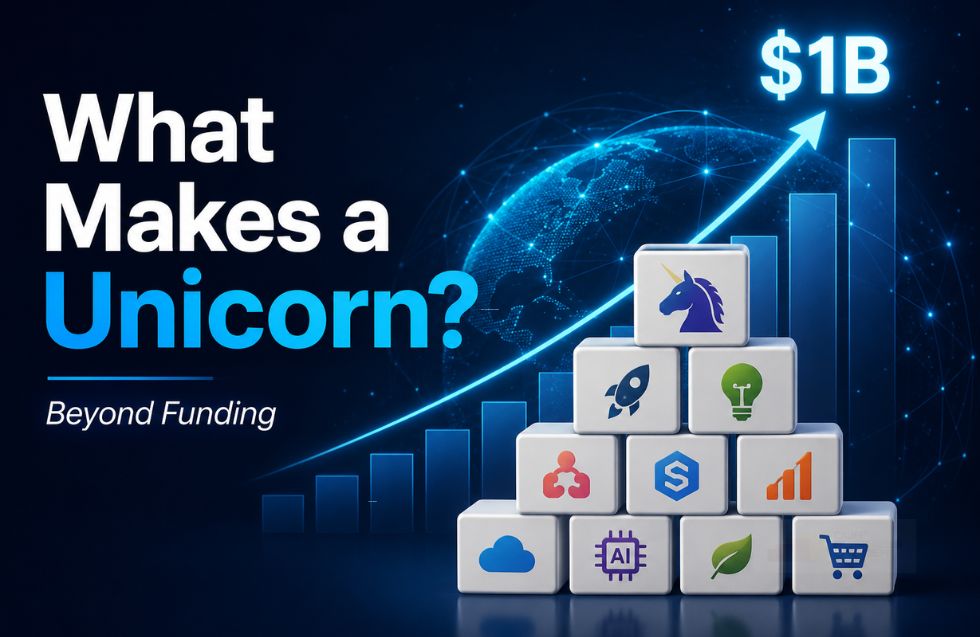
What Defines a Billion-Dollar Startup (Unicorn)?
A unicorn startup is a privately held business deemed to be greater than $1 billion in worth. According to Investopedia, unicorns are, by definition, unusual but the rise of AI businesses, SaaS companies and digital marketplaces make achieving a billion-dollar valuation easier than ever.
That being said, valuation by itself will not guarantee wins in entrepreneurship. Startups must pivot to and adopt scalable emerging business models to survive and thrive in the competitive landscape.
The Future of Emerging Business Models in the Success of Startups
Old-fashioned business models sometimes do not have the kind of flexibility required in this age of technology. Some of the strongest new business models driving billion-dollar businesses are as follows:
1. Subscription Models
Recurring revenue models from the streaming empire of Netflix to SaaS titans such as Salesforce demonstrate that subscriptions are not only handy but fiscally viable. With Decentro, recurring revenue guarantees long-term profitability and customer loyalty. These models are now regarded as one of the strongest examples of new business models for startups.
2. Platform & Marketplace Models
Startups such as Airbnb and Uber disrupted industries by functioning as platforms instead of holding assets. Platforms take advantage of network effects, enabling exponential growth possibilities. Marketplaces are one of the most powerful new business models still attracting billions in investment.
3. Direct-to-Consumer Models (DTC)
Companies such as Warby Parker and Glossier (the millennial companies) eliminate retail to foster a closer interaction with their customers & drive better margins. D2C is now being touted as one of the business models shaping the next generation of retail.
4. The B2B2C Hybrid Model
This new model unites consumers and businesses. For instance, SaaS products that enable companies to serve end-users more efficiently while harvesting value from both ends of the transaction. These new business models render startups extremely flexible in intricate industries.
5. Business Models Powered by AI
Artificial Intelligence companies such as OpenAI are risking success with scalable product offerings that utilize a combination of automation and personalization, in areas such as chatbots to predictive analytics.
As stated by Wayra, technology innovation is key to billion-dollar valuations. AI solutions are now leading the next generation of emerging business models.
Also check: Unicorn Startups: What Drives Billion-Dollar Valuations?
Key Categories Driving the Next Generation of Billion-Dollar Startups
1. AI & Automation
AI creates Forbes Next Billion-Dollar Startups 2025 list examples, such as copilot AI and various automation tools. These industries prosper due to scalable next-generation emerging business models that effectively monetize AI.
2. Fintech and Digital Banking
The emergence of neobanks, digital wallets and cryptocurrencies is pushing a wave of disruption to traditional forms of finance. Platform-based emerging business models are depended upon by fintech unicorns.
3. Health Technology and Biotechnology
Startups based on telemedicine, genomics and biotech solutions are worth billions in funding with the introduction of hybrid emerging business models that drive research, technology and access to patients.
4. GreenTech and Sustainability
The future billion-dollar market may come from climate tech companies like clean energy platforms and circular economy businesses. Their success lies in constructing new business models based on sustainability.
5. SaaS & Cloud Services
SaaS firms are investor darlings because of scalable infrastructure and regular recurring revenue. Subscription and platform-based business models dominate the industry.
Case Studies: Unicorns Created with Disruptive Business Models
- Stripe: Developed simplified business APIs that disrupted and reimagined online payments.
- OpenAI: Aiming to become one of the largest billion-dollar AI companies, OpenAI is and will continue to transform industries from healthcare to education with its AI-driven and AI-enabled emerging business models.
- Canva: Empowered global citizens who are not designers with a SaaS solution that is simple and easy to use.
- Revolution: Revolutionized the banking industry through mobile-first banking.
Struggles of Creating a Billion-Dollar Startup
Challenge persists even with innovative models:
- Market Competition: Globalization necessitates that startups compete with global competitors.
- Investor Expectation: Due to the possibility of rapid growth, profitability becomes secondary.
- Global Expansion: A new region that presents not only regulatory and regional consumer expectations, but also congruency with agile and emerging business models.
Future Trends: What’s next on the billion-dollar industry path?
The unicorn of the future will include:
- The rise of AI across sectors.
- Climate-solution innovations.
- Businesses that are on the blockchain or use Web3.
- Customer experiences that are hyper-personalized to a level we have never seen.
- Startups that are best positioned to lead these markets will be startups that learn to master these contemporary business models.
FAQs
Q1. How to make a billion-dollar startup?
By identifying a scalable problem, innovating with emerging business models, building strong investor and customer trust.
Q2. What is a $1 billion startup called?
It’s called a Unicorn, which refers to a rare valuation (billion-dollar) startup business.
Q3. How hard is it to become a billion-dollar company?
As per the experts stated, it’s very hard only less than 1% ever become Unicorns.
Q4. What industries will produce the next unicorns?
Most likely AI, Fintech, HealthTech and GreenTech with business models driving innovation.
Q5. Are there billion-dollar AI startups in our future?
Yes. AI-enabled startups are some of the fastest-growing unicorns and OpenAI and Anthropic are leading the pack.
Q6. How critical are business models to startup success?
The proper future business models guarantee scalability, investor trust and long-term revenue streams.
In conclusion
The horizon for billion-dollar startups, innovative and emerging business models that are changing the status quo and stimulating innovation are providing the foundation for the future of entrepreneurship. Whether subscription-based SaaS, AI-powered platforms or sustainable GreenTech remedies, tomorrow’s startups are being constructed on architectures that scale quickly and evolve at an even quicker pace.
But building a billion-dollar startup is not only about pursuing valuation, it’s about addressing real-world issues in ways that establish long-term value for customers, investors and society. That’s why unicorns such as OpenAI, Stripe and Canva are not just businesses, they’re movements transforming industries.
In the future, it is those founders who dare to experiment with novel business models that will be creating the next billion-dollar industries ranging from AI and HealthTech to sustainability and Web3.
The strategy is straightforward: create, grow and keep the customers at the center of your focus.
For founders, this is the most thrilling time to build in history. Your next unicorn might just be waiting in the wings.Also read our recent article “The World’s Most Profitable Business Models: Where Money Never Stops Flowing”