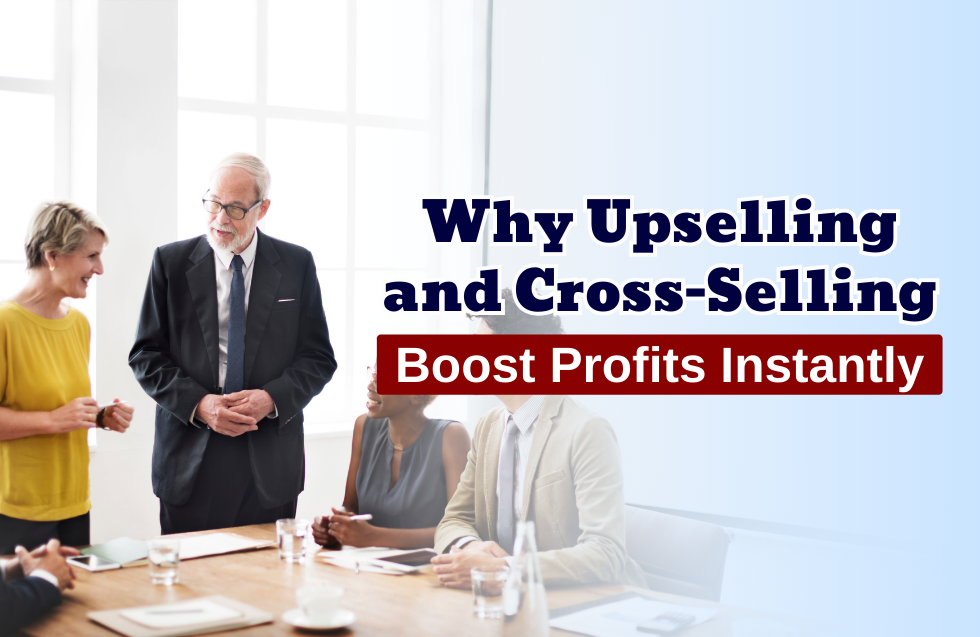
When upselling and cross-selling can be done right, it can be a powerful tool that can change the entire game of a business, particularly an e-commerce or retail business. By using these methods, you do not have to go after new customers (which is costly and takes a lot of time), but you can make more money from the customers who are already yours, thus your profits will rise fast and your relationships with customers will become stronger.
In this blog, we will explore the reasons that explain the success of the upselling and cross-selling strategies, how they impact the key metrics and the great practices you can use to get them accomplished efficiently.
Understanding Upselling and Cross-Selling
First, what do “upselling” and “cross-selling” really mean?
Upselling is the concept of showing a customer a superior, more luxurious, or more expensive version of a product that they were already going to buy. As an example: a person picks a basic smartphone and the seller presents a device with more storage or a better camera.
Cross-selling refers to the act of giving a customer the products that go well together or are compatible with the principal product. For example, if someone buys a laptop, the vendor suggests a laptop bag, a wireless mouse, or software license.
In fact, the two methods have the same objective of either increasing the purchase’s worth (upsell) or by grouping together items that are related (cross-sell). When done thoughtfully, this doesn’t feel pushy; but helpful, convenient and tailored to customer needs.
Key Business Metrics That Improve With Upselling & Cross-Selling
Enhanced Average Order Value (AOV)
Thriving business and cross-selling are the fastest ways to raise the Average Order Value (AOV) of the selling and customer services’ profits. AOV is just like the average value of the customer’s purchase with the order (total revenue over total orders).
Welcoming customers to move from their current less pricey items to more expensive ones (from upselling) and inviting them to buy less attractive but necessary products (from cross-selling) are among the ways that AOV can naturally go up. This results in increased revenue of the business and transaction without the need to bring in new customers.
Higher Customer Lifetime Value (CLV)
Upselling and cross-selling not only add short-term value but also help in developing long-term value. As soon as a customer finds that your shop offers good value and proper recommendations, it is highly likely that the customer will come back for more purchases in the future. This increases Customer Lifetime Value (CLV), which is the accumulated revenue generated by one customer throughout his/her entire journey with your brand.
Growing CLV can lead to a significant increase in the profit margin because the cost of retaining and selling more to existing customers is much lower than that of acquiring new customers.
Better Profit Margins & ROI
Acquiring new customers often carries high marketing costs and effort. In contrast, upselling and cross-selling to existing customers leverage lower marginal cost: these customers are already “in the door”. That leads to a higher profit margin per sale, because extra products or upgrades tend to have better margins and you avoid repeated acquisition costs.
Increased Conversion & Repeat Sales Rates
Because upsells and cross-sells are often offered when customers are already in “buying mode” e.g. at checkout, product pages, or shortly after purchase, they are more likely to accept additional offers. This boosts overall conversion rates and encourages repeat sales and long-term loyalty.
Why These Strategies Deliver Results Almost “Instantly”
Customer is Already Committed
When a customer has decided to buy, they’ve passed the hardest hurdle: commitment. At that point, offering a better product or complementary item is a relatively easy sell because the barrier of trust and intent is already crossed. That’s why upselling or cross-selling at checkout or on the product page works so well.
Lower Customer Acquisition Pressure
Upselling and cross-selling, two selling techniques, were designed to help you fully utilize your existing customers instead of wasting your resources looking for new ones. This not only helps in freeing up marketing and acquisition budgets but also in producing profit gains more efficiently.
Better Customer Experience & Satisfaction
If recommendations are relevant, helpful and add real value, customers appreciate it. Upselling a better product or suggesting needed accessories can make the purchase more complete, boosting customer satisfaction and shaping loyalty.
Make Use of Psychological Triggers: Ease & Worth
The cross-selling technique prevents the customers from the trouble of looking for additional items in other places; the upselling brings out the extra value or better features. If the recommendations are considered as aid rather than force, the customers usually react favorably which results in the instant increase in both the size of the order and the satisfaction.
Realistic Impact: What Data and Studies Show
- In effective e-commerce setups, cross-selling alone contributes 10–30% of total revenues.
- Upselling can increase revenue by 10–30% on average, just by guiding customers toward premium versions of what they’re already buying.
- Some platforms report combined upselling + cross-selling strategies delivering as much as 42% more income from buyers (both new and existing).
- Additionally, upselling and cross-selling help increase Customer Lifetime Value (CLV) significantly, meaning customers spend more over time rather than just once.
- These aren’t small increments; they can fundamentally shift a company’s profit trajectory, often “instantly,” once the strategies are implemented properly.
Best Practices for Implementing Upselling & Cross-Selling Successfully
If you really want to annoy customers with your upselling and cross-selling, here is what you should aim for.
| Practice | Why It Matters |
| Personalized Recommendations (based on purchase history, browsing behavior) | Generic suggestions feel irrelevant; personalized ones boost conversion. |
| Offer Relevant & Complementary Items (not random products) | Ensures suggestions add value; improves trust and reduces bounce. |
| Timely Placement product page, cart/checkout, post-purchase emails or follow-ups | Catch customers when they’re most receptive (buying mode). |
| Transparent Value Proposition focus on benefits (not just price or features) | Helps customers see real benefit; reduces the “pushiness” feel. |
| Use Bundles or Special Offers upgrade + discount, bundle set, limited-time deals | Creates urgency and perceived value; encourages bigger purchases. |
| Focus on Customer Needs, Not Aggressive Selling | Builds trust and loyalty; customers feel supported, not pressured. |
Common Mistakes to Avoid
- Being pushy or irrelevant: Suggesting random or expensive items that don’t match customer interest can feel spammy and push the customer away.
- Overloading customers with offers: Too many suggestions at once can overwhelm rather than convert; less is often more.
- Failing to personalize: Blanket “also buy this” offers rarely convert; personalization improves relevance and trust.
- Bad timing: Pushing upgrades or cross-sells too early (before the customer is ready to buy) often fails; timing matters.
- Ignoring value focusing just on price: Customers respond to value. They will simply turn it down if they can’t see how higher the price is of any advantage.
- On the contrary, error prevention maintains the customer-friendly and productive character of upselling and cross-selling operations.
Upselling and Cross-selling: Not Just for E-commerce
Indeed, e-commerce is the main beneficiary of such practices, but the methods of upselling and cross-selling are not limited to online outlets only. It is applicable in several different industries:
- In-store shopping implies additional products during payment (e.g. callback parts, service contracts).
- Software as a Service digital products grant access to deluxe subscriptions or supplementary modules.
- Business enterprises also suggest tiers, extra services, or co-service areas maintenance, support and adding-on.
- B2B deals encourage upgraded offerings, big orders-based categories, or joint services/products.
In every case, where customers are making a decision to buy, if you can comprehend their needs and present the offer in an intelligent way, then upselling and cross-selling will double your profits.
Final Thoughts: Reasons for Including Upselling & Cross-Selling in Your Growth Strategy
If profit growth “instantaneously” is what you desire, then upselling and cross-selling have to be a priority in your strategy chart. These two measures will assist you in:
- Obtaining more revenue from one sale (higher AOV)
- Receiving more value from each customer over a period (higher CLV)
- Enhancing profit margins by reducing costs of customer acquisition
- Increasing customer retention through appropriate, worthy suggestions
- Developing customer loyalty and receiving repeat business without the hassle of finding new customers
To sum it up, upselling and cross-selling simply convert every customer into bigger chances through value addition. If done ethically and thoughtfully, it becomes a win-win situation: the customers get more value and you get the profit. Regardless of whether you have an online store, provide SaaS, or any other kind of business that deals with products and services, it is always a smart move to add upselling and cross-selling techniques to your sales funnel.
FAQs
1: Explain how upselling is different from cross-selling?
Upselling is one of the ways which changes a customer’s mind to buy a more expensive or a product with more features than he/she had thought of (e.g. the customer buys the premium model instead of the basic one).
Cross-selling is the business of proposing products that are both complementing and can be used together with the customer’s primary purchase (e.g. accessories, add-ons).
2: When is it better to use upselling and when is cross-selling more effective?
Upselling is a great tool when customers are willing and eager to pay for premium features or upgrades and thus, profit margins are high. In some situations, cross-selling becomes more powerful when attached complementary products provide convenience in completing a purchase (particularly on a product with lower gross margins).
3: Wouldn’t upselling or cross-selling annoy customers?
No, if done with proper consideration. When offers are targeted, helpful and bring real value, customers are often open to receiving suggestions that satisfy their needs.
4: How much can upselling and cross-selling raise revenue?
In most cases, the right upselling can bring a business’ income up by 10-30% on average; similarly, cross-selling alone can account for 10-30% of total revenue. The combined use of these two tactics alone has resulted in some retailers seeing their income grow by a whopping 42%.
5: When is the best time to present upsell or cross-sell offers?
The best time is when the customer is buying – i.e. on the product page, at checkout, or via follow-up/purchase confirmation emails. That is the time when they are the most willing to accept it.
6: Do these strategies work only for e-commerce?
No. Upselling and cross-selling can also be implemented in different industries such as retail stores, service businesses, SaaS providers and B2B companies where customers can be given the option of upgrades or additional products that complement their purchase.