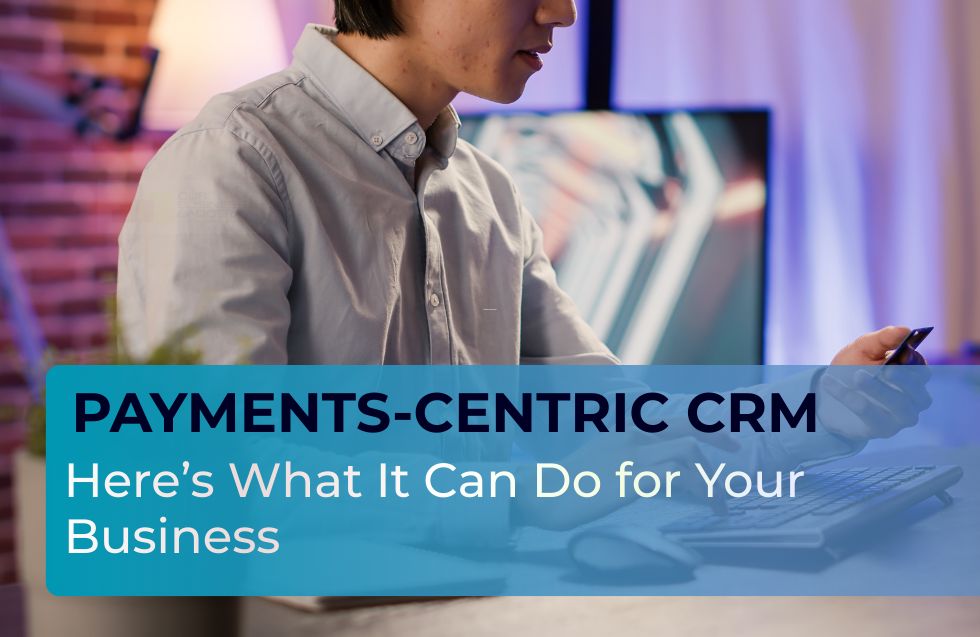
A payments-centric CRM is a customer management platform that integrates payment processing, revenue analytics, and CRM data. Meanwhile, traditional CRMs essentially keep payments separate from customer data, making it difficult to tie financial transactions to customer relationships.
Curious about the benefits of a payments-centric CRM? Read on to see what it can do for your company.
Less Operational Overhead
Heavy operational overhead involves wasted time, higher labor costs, and generally slower processes. In turn, capturing revenue is also slower, which can financially strain a business. With reduced efficiency and lower productivity, growth can also be hard for a company to obtain, while also indirectly leading to decreased satisfaction among customers.
When CRM and customer payments are synced, however, this helps reduce operational overhead headaches for the business. This means less time spent on exporting and importing spreadsheets, lower software costs, and reduced compliance issues and errors. It also means cleaner data, less employee involvement in collections, and fewer internal handoffs.
A traditional CRM, on the other hand, necessitates separate tools for invoicing and reporting, involves higher IT maintenance, and requires business owners to juggle multiple vendor contracts and subscriptions.
Improved Customer Insights
Clear customer insights are critical in a multitude of ways. For companies, it means decisions can be made on real-time data, offers and communications can be tailored to customers based on their actual behavior, and at-risk customers can be easily identified. Ultimately, solid customer insights can lead to improved customer loyalty, engagement, and conversions.
Unfortunately, traditional CRMs don’t allow business owners to view transactions and customer insights on the same system. Because they’re kept separate, it gives limited visibility regarding customer spending, often requires lifetime value (LTV) to be manually calculated, and lacks context when it comes to payment reliability.
A payments-centric ISO CRM makes viewing and analyzing customer insights a seamless experience. It tracks real-time spending, reveals which customers are helping drive profitability, and segments customers based on demographics and engagement. Ultimately, this provides businesses with improved targeting and stronger retention strategies.
Faster Billing
Quicker billing can have many advantages for a business. It can lead to improved cash flow and better financial stability, reduced uncollected revenue or late payments, and faster resolutions during payment discrepancies. Not only is this good for the company but can also lead to smoother customer interactions with that business.
With traditional CRMs, invoices must be created through separate tools, which can pose several issues. This means tedious manual data entry, a higher risk of billing errors, slower payment completion, and risk of late or missed billing. Traditional CRM platforms also require manual follow-ups, don’t automatically notify about failed payments, and lack real-time billing status.
Billing, however, is faster with a payments-centric CRM system. Invoices can be automatically generated from customer records, recurring billing can be automated, and payment alerts are sent instantaneously when a payment fails. For companies, this can result in fewer billing mistakes, quicker payment confirmations, and faster recovery of lost revenue.
More Predictable Revenue
Being able to predict revenue is important. Predictable revenue enables businesses to plan their expenses and hiring, effectively manage their cash flow, and set realistic growth goals for their company. Complete, real-time data that is integrated with actual customer behavior best allows revenue to be accurately predicted.
Traditional CRMs make predicting revenue difficult. They don’t automatically update based on payments. Failed or late payments also aren’t visible in the system and aren’t adjusted into payment forecasts. As a result, these issues can lead to a sales pipeline that looks positive even when it isn’t and create misalignment between teams.
Payments-centric CRM systems are different in that forecasts are automatically adjusted based on real payment behavior. Missed or failed payments are also indicated early, revenue forecasting is shared across the team, and recurring income visibility is up-to-date and automatic.
Better Customer Experience
The experience your customers go through matters, no matter which industry you’re in. One bad customer experience can lead to a bad review, poor word of mouth, future loss of business, and declining reputation.
Traditional CRMs don’t always offer the best experience for customers. With payments and customer data being separate, customers often have to juggle communication between different systems, receive invoices from third-party systems without a unified login, and struggle to understand unexplained charges.
These traditional systems also make it challenging when dealing with inquiries and payment issues. Customers are often forced to contact billing separately as support agents have no way of knowing why a payment failed. In turn, this leads to longer resolution times and frustration from being handed off multiple times.
The customer experience is improved with a payments-centric CRM. Customers rely on a single communication hub, make payments through an integrated interface, receive real-time payment status updates, and can save payment information for faster and smoother checkouts in the future. As a result, customers will be less frustrated and won’t need as much support.
Improved Compliance and Reduced Risk During Audits
Staying in compliance and remaining audit-ready is important. There’s always the chance that something could go wrong, but with compliance being a time-consuming and costly expense, not having a payments-centric CRM isn’t a wise move.
A traditional CRM can be detrimental in this area as it can lead to data mismatches during an audit, increases the risk of improper sensitive data sharing, and requires manual effort to reconcile records. This can easily lead to a delayed resolution during an audit and result in higher audit costs.
The good news is, a payments-centric CRM has an integrated rather than a disconnected system. This means compliance is easier to demonstrate, audits are faster and less disruptive, and staff can instantly view the full transaction history at once during a dispute. All in all, businesses can enjoy reliable reporting, unified access control, and built-in PCI compliance.
Conclusion
A payments-centric CRM has the upper hand compared to traditional CRMs. Rather than keeping customer data and financial transactions separate, payments-centric CRMs are more integrative. From reduced operational overhead to improved customer insights, these modern-day CRMs can be beneficial for any business.