One Choice Powers Your Growth
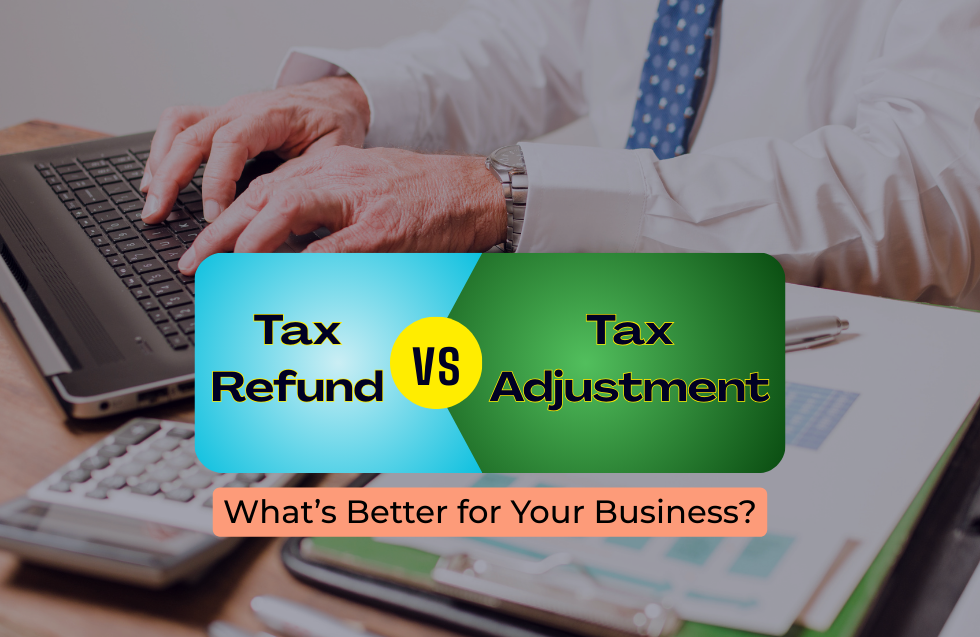
Consider the scenario where you finish the tax season and get an additional cash in your account or see your tax bill reduced every year without having to wait. For owners of businesses with tight cash flow, ambitious plans for growth and unexpected expenses, the decision between a tax refund and tax adjustment is a significant one.
A tax refund gives you quick access to your cash since it is money that has been overpaid in taxes, while tax adjustments lower your taxable income via smart deductions and credits for ongoing savings.
This guide leads you through the entire process starting from the very basics up to real-life victories, thus, allowing you to choose the option which best suits the future of your business.
Step 1: Grasp Tax Refunds – Your Fast Cash Lifeline
Tax refunds start simple: your business pays more through TDS, salaries or estimates than owed, so the tax department sends back the surplus after filing. This creates an instant cash injection, often within weeks, ideal for covering urgent bills or seizing opportunities.
For sole traders or partnerships, it flows from cautious quarterly payments on contracts. Picture it as your own money parked interest-free with the government all year which is useful for seasonal dips, like a retailer restocking before Diwali. Yet, smaller average refunds under updated slabs remind us to plan sharper.
Step 2: Unpack Tax Adjustments – The Smart Long-Term Play
Now pivot to tax adjustments, where you proactively reduce taxable income by claiming deductions for rent, travel, equipment depreciation, or credits for investments like green tech. These embed savings directly into your filing, eliminating the need to overpay first.
This approach turns everyday costs into shields – home office space at ₹1.5 per square foot, or accelerated write-offs on machinery. Growing businesses thrive here, scaling savings as operations expand, much like a factory slashing liability through asset claims without waiting for a cheque.
Step 3: Clear Comparison – Tax Refund vs Tax Adjustment at a Glance
With basics covered, compare head-to-head to feel the flow:
| Key Aspect | Tax Refund | Tax Adjustment |
| Timing | After filing, from excess payments | During planning, upfront reductions |
| Cash Flow | Sudden boost, sometimes delayed | Steady control, no money tied up |
| Effort | Easy estimate tweaks | Track receipts diligently |
| Best Fit | Cash shortages or uncertainty | Stable growth and big investments |
| Watch Out For | Processing lags and shrinking sizes | Audit risks without proofs |
Refunds react to past overpayments; adjustments shape your future – a natural progression for savvy owners.
Step 4: Refund Advantages – When Speed Seals the Deal
Refunds deliver pure liquidity magic. A cafe grabs ₹1.5 lakh back to weather monsoons, no loans needed.
- Fuels immediate needs like payroll or repairs seamlessly.
- Simple for setups with automatic withholdings.
- Sparks that rewarding “bonus” feeling to reinvest boldly.
This quick flow keeps volatile operations afloat effortlessly.
Step 5: Refund Downsides – The Hidden Drains
But overpaying ties up your cash all year, earning nothing while portals occasionally lag. Slab changes further trim sizes, nudging you toward better paths.
Step 6: Adjustment Strengths – Savings That Compound
Adjustments quietly stack wins. A freelancer writes off ₹50k on a laptop plus ₹1.5 lakh in investments, trimming ₹60k from the bill annually.
- Drops your tax base permanently for year-after-year gains.
- Grows with you through credits on EVs or R&D.
- Aligns perfectly with incentives for modern businesses.
This builds a foundation that strengthens over time.
Step 7: Adjustment Hurdles – And Easy Fixes
Records demand discipline – categorise meals at 50%, travel fully but apps make it painless. Skip this, audits loom; nail it and you dominate.
Step 8: Real Stories – Lessons from Businesses Like Yours
Flow into action with examples. A Narnaund retailer’s ₹2.5 lakh refund bridged sales gaps fast, yet a peer’s deductions proved more reliable long-term.
A Delhi startup transformed ₹5 lakh R&D spends into ₹1.2 lakh breaks, hiring ahead. Factories fixing past errors via adjustments cut liability 20% – blueprints for manufacturers everywhere.
These transitions show refunds for survival sparks, adjustments for sustained fire.
Step 9: Current Trends – What’s Shaping 2025-2026 Choices
Slabs rising to ₹12 lakh tax-free shrink refunds, while promised trackers speed processing. Startup exemptions amplify adjustments, rewarding bold planners in a precise world.
Step 10: Refund Roadmap – Extract Every Rupee
- Forecast using prior returns, tweak estimates quarterly.
- Prioritise credits like education loans swiftly.
- Monitor portals daily for status.
- Reinvest wisely: clear debts, then grow savings.
- Balance withholdings to hit the sweet spot.
Step 11: Adjustment Blueprint – Lock Savings Tight
- Audit costs: full travel, half meals, all subscriptions.
- Depreciate aggressively on assets.
- Grab credits for startups or green shifts.
- Amend filings within windows.
- Digitise proofs with cloud tools.
Step 12: Traps to Dodge – Common Stumbles
Fake receipts flag instantly; deadlines kill refunds. The new regime limits deductions chosen for heavy claims. Pros uncover extra ₹50k savings routinely.
Step 13: Tailored Picks – By Business Type
- Freelancers: Adjustments via home offices.
- Retail: Refunds for stock surges.
- Manufacturers: Depreciation rules.
- Startups: Credits plus buffers.
Step 14: Your Action Flow – Start Winning Now
- Simulate scenarios on calculators.
- Gather and organise documents.
- Test refund versus adjustment math.
- Review quarterly without fail.
- Reset post-budget yearly.
The Flowing Finish: Ignite Your Business Edge
Refunds light quick fires for tough spots; adjustments forge unbreakable flames for triumph. In an era of smarter tools and richer rewards, lean adjustments unless cash demands otherwise. This seamless path from hook to action equips you to thrive. Any questions? Share in the comments!