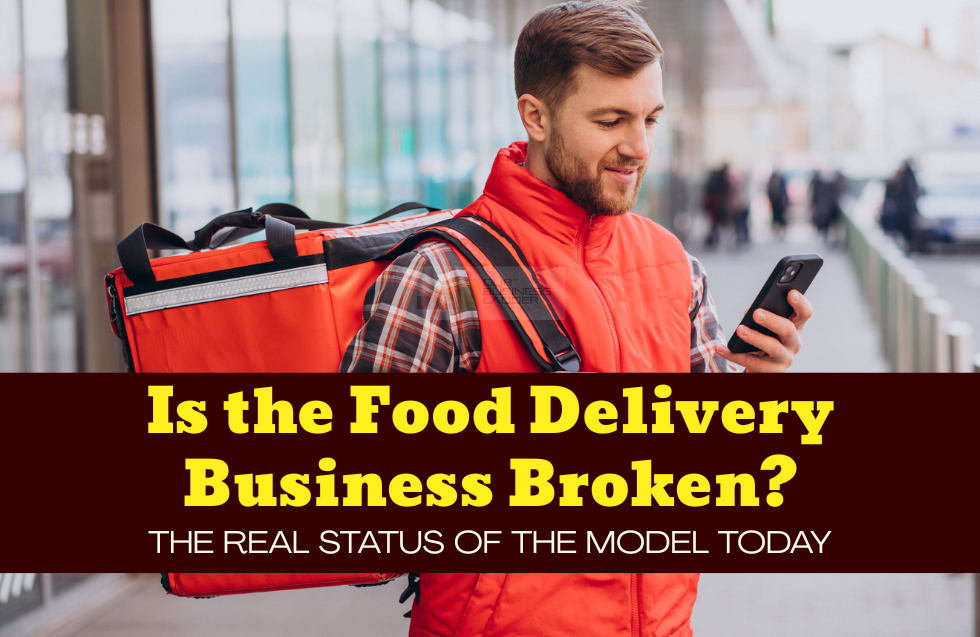
Food delivery services have changed how people live today by providing exceptional convenience to all business professionals who include corporate workers, entrepreneurs and business executives. The platforms need to operate their systems because they face growing demands in 2026 which creates doubts about their operational model.
The food delivery industry faces a fundamental crisis because delivery companies must deal with high commission costs and their delivery operations are inefficient and customer preferences are changing.
This complete study evaluates existing problems, current financial conditions, upcoming trends and potential solutions, which deliver practical knowledge to business executives who need to assess possible business opportunities and partnerships within this fast-evolving market.
The Evolution and Current Landscape of the Food Delivery Business
The food delivery business started as an essential part of the gig economy which developed from telephone orders into advanced aggregator systems that include Zomato, Swiggy, DoorDash and Uber Eats. The global market reached over $150 billion in revenue by 2025 while India’s market exceeded $5 billion because of growing demand from urban areas. The platforms use a marketplace system which connects restaurants and gig economy riders with customers while charging delivery fees and taking 20-35% commission from each order.
Current metropolitan areas maintain 5 to 7 monthly orders for each active user because corporate lunch hours and evening convenience create demand. The price sensitivity of customers in tier-2 and tier-3 markets together with their established offline shopping patterns create obstacles that prevent market growth. The sector provides business professionals with operational partnerships and investment opportunities but the developing economic conditions require thorough evaluation.
The food delivery business model faces critical challenges which impact its operations throughout its entire value chain. The platforms face three issues which include regulatory barriers, decreased profit margins and their inability to maintain service standards which leads to customer distrust.
Key challenges include:
1. Excessive Commission Structures:
Restaurant operators must pay 25-35% platform fees, which leads many independent restaurants to establish ghost kitchens and direct-to-consumer sales operations. The consolidation process benefits large restaurant chains, but it creates disadvantages for smaller restaurant businesses.
2. Rider Welfare and Retention:
Delivery personnel receive $1-2 for each order they complete, which limits their income potential because of increasing fuel expenses and safety risks. The Indian government created new regulations which limit delivery times to 10 minutes because of the ongoing dangers linked to fast delivery schedules.
3. Service Quality Degradation:
Multi-order batching—where riders handle multiple deliveries undisclosed to customer results in 20-30% ETA inaccuracies and substandard food temperature. The packaging failures create additional problems which lead to more customer dissatisfaction.
4. Pricing Pressures:
The delivery fees which range from 50 to 100 per order create an additional cost burden which leads to 15% annual customer turnover, especially among price-sensitive customers.
5. Operational Inefficiencies:
The restaurant partners face two problems because of suboptimal routing which increases fuel consumption by 20% and payment processing delays.
The existing systemic pressures demonstrate how traditional aggregator methods which support new market entrants face their weakest point.
Financial Analysis: Profitability Assessment of the Food Delivery Business
The study demonstrates that business profitability depends on two factors which are the operational scale of a company and the geographic areas it serves. Established platforms achieve marginal EBITDA positivity in high-density urban markets through advertising revenue and subscription models yet unit economics remain challenged.
Performance Comparison
| Performance Metric | Leading Platforms | Emerging Competitors |
| Commission Revenue | 25-35% per order | 15-25% (promotional) |
| Average Delivery Fee | $2-4 (surge-adjusted) | $1-2 (subsidized) |
| Contribution Margin/Order | $0.30-0.80 | -$0.50 to -$1.00 |
| Break-even Order Volume | 400+ daily per outlet | 900+ daily per outlet |
| Customer Lifetime Value | $200 (loyal segments) | $50 (high churn) |
Entrepreneurs achieve sustainable returns from pure aggregator models only when they invest significant funds to acquire new customers. The integration of grocery quick-commerce with specialized verticals delivers better financial results than traditional business operations.
The Food Delivery Business has introduced multiple new developments since February 2026
The current situation experiences rapid changes. Flipkart launched its food delivery pilot which operates from Bengaluru to compete against Swiggy and Zomato through its use of integrated kitchen facilities instead of traditional aggregation methods. The quick-commerce sector now faces slowdown because industry leaders recognize their inability to deliver products within twenty minutes due to limitations in available products and delivery personnel capacity to handle multiple orders.
Regulatory changes intensify pressures: India’s 18% GST application to unregistered rider transactions elevates platform costs by 10-15%, while safety mandates prioritize reliability over velocity.
The ONDC food verticals project has not succeeded because its implementation has been executed in an unpredictable way which only functions as a price control system. Companies prefer health-oriented product packages that use environmentally friendly materials because these options match their employee wellness initiatives.
Strategic Solutions and Opportunities for Business Professionals
The food delivery industry provides specific market entry chances which benefit unique businesses despite existing difficulties. Advanced technologies provide practical remedies:
- AI-Optimized Routing: The system achieves fuel cost savings between 15 to 20 percent through its use of predictive algorithms.
- Transparent Operations: The system reveals its batching process in real time together with its premium packaging system which leads to a 25 point increase in Net Promoter Scores.
- Vertical Specialization: Corporate meal programs together with health-focused delivery services reach average order values above $25 which results in better customer retention.
Business leaders can capitalize through:
- Entrepreneurial Ventures: Niche platforms serving corporate clients or premium dietary segments.
- Restaurant Partnerships: Revenue sharing agreements or proprietary applications which maintain profit margins.
- Corporate Procurement: Employee benefits programs which organizations can purchase in bulk to ensure they will receive consistent demand.
Actionable Strategies for Success in the Food Delivery Business
Business professionals seeking entry or expansion should prioritize:
- Market Segmentation: Businesses should focus on high-value niches which include corporate catering and specialized diets.
- Technology Integration: Companies should implement AI analytics to create demand predictions and establish pricing that adjusts to market conditions.
- Labor Optimization: The company should create platforms which support rider needs to improve worker retention and maintain service levels.
- Diversified Revenue: The business will generate income from both food delivery services and grocery bundle offerings.
- Data Governance: The company will use customer data to create personalized strategies which will help retain customers.
The first validation conducted through single urban zones allows companies to expand their operations while decreasing financial risks.
FAQs
1. Is the food delivery business profitable for new entrants in 2026?
Established platforms achieve breakeven in metropolitan markets. However, newcomers require niche positioning and $20+ average order values for viability.
2. What are the primary operational challenges in the food delivery business?
The main fundamental problems of the system include high commissions, delivery delays and rider retention problems which combine with increasing fees.
3. How does recent competition affect the Indian food delivery business?
Flipkart’s Bengaluru initiative creates competitive pressure on existing companies which now need to adopt integrated systems instead of using their traditional marketplace structure.
4. What opportunities exist for entrepreneurs in the food delivery business?
The two business areas which focus on corporate clients and wellness markets provide better economic advantages than general market aggregation.
5. How do 2026 regulations impact food delivery business operations?
The new delivery time regulations and GST tax changes both increase operational expenses for businesses while they force companies to provide better service quality.
Conclusion
The food delivery business faces real structural problems which it successfully overcomes through its ability to change operations rather than shut down. For corporate decision-makers entrepreneurs and business strategists success requires them to focus on accurate target selection, technology utilization and alignment with stakeholders. Pure aggregator business models face growing limitations while hybrid business models and vertical specialization create opportunities for ongoing value development.
Business professionals equipped with this analysis can navigate partnerships investments or ventures with clarity capitalizing on a sector poised for refined growth amid consolidation. Strategic participation—rather than speculative expansion—position leaders to thrive in this essential industry.