
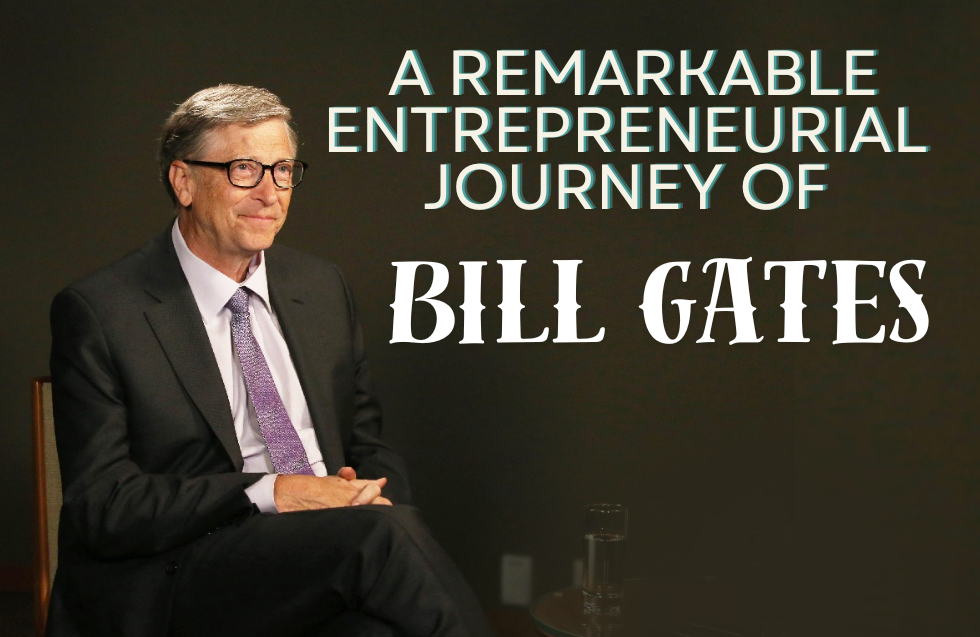
The story of Bill Gates is among those narratives that can energize anyone who dares to dream big in business or tech. From the beginning, as a young boy experimenting with computers in Seattle, he grew Microsoft into a global force that revolutionized the way the world operates.
A complete exploration of the journey of Bill Gates is a blend of motivating, authentic lessons and pivotal times which can guide you to recognize openings in your personal life.
Early Life Sparks
The journey of Bill Gates kicked off on October 28, 1955, in Seattle, Washington. Growing up in a family with a lawyer dad and community leader mom, Bill showed smarts early. At 13, while at Lakeside School, he got hooked on a computer terminal, coding his first program—a tic-tac-toe game and even started Traf-O-Data, a traffic data biz that pulled in $20,000.
Harvard came calling in 1973 for pre-law, but Bill’s head was elsewhere. He saw the Altair 8800 ad and ditched classes to code. Dropping out in 1975 felt right; software was the future. That bold move in the journey of Bill Gates shows passion often beats a diploma, especially with his sky-high SAT score sharpening his edge.
Launching Microsoft
Nothing grabs you like 1975 in the journey of Bill Gates. Teaming with pal Paul Allen, they started Microsoft in Albuquerque after nailing a BASIC deal for the Altair—coded blind without the hardware. Pure hustle turned scarcity into a win.
Then 1980 hit with IBM’s PC needing an OS. Bill snagged MS-DOS cheap, licensed it smartly to everyone else and boom—rivers of cash. Windows 1.0 dropped in 1985, making computers user-friendly. At 31 in 1987, he hit billionaire status first. It’s classic tech entrepreneurship: software fueling hardware booms.
Business Smarts and Wins
Bill didn’t invent hardware; he crafted software worlds like MS-DOS, Windows and Office that put PCs everywhere. Licensing wide, not selling out, scaled it huge. The journey of Bill Gates thrived on his “computer on every desk” vision, beating foes like Apple with deals and dev tools.
Success came from foresight, loving customer pain points and adapting fast. Mentors like Paul pushed him and the family grounded him. He’s the technopreneur type—transformational, building teams that scale dreams. Habits? Devours 50 books a year, thinks deep in retreats, learns from flops. Patience fuels it all.
Money, Control and Beyond
In 2025, Bill’s net worth sits near $130 billion from old Microsoft chunks (down from 45%) and Cascade bets on farms, stocks, you name it. He’s given away over $50 billion, but it keeps climbing. He holds under 1% of Microsoft now and Satya Nadella runs the public show.
The office runs $70 a year personal, $6-20 per user monthly for biz—keeping tools affordable like Bill always wanted. At 70, the journey of Bill Gates shifts to Gates Foundation fights against disease and books like his memoir Source Code.
Roots, Family and Wisdom
Paul Allen, mom’s connections and sci-fi fueled Bill’s entrepreneur fire. His daughters—Jennifer the rider, Rory at Chicago, Phoebe carry the torch post-divorce. No doubt, he’s the real deal entrepreneur.
Known for tech revolutions and wiping out polio, malaria.
Traits: sharp innovator, fierce competitor, caring leader.
Top quotes from the journey of Bill Gates:
- “Success is a lousy teacher. It seduces smart people into thinking they can’t lose.”
- “Your most unhappy customers are your greatest source of learning.”
- “As we look ahead into the next century, leaders will be those who empower others.”
- “It’s fine to celebrate success, but it is more important to heed the lessons of failure.”
- “Life is not fair; get used to it.”
- “Patience is a key element of success.”
- “The first rule of any technology used in a business is that automation applied to an efficient operation will magnify the efficiency.”
- “I choose a lazy person to do a hard job, because a lazy person will find an easy way to do it.”
- “If you are born poor it’s not your mistake, but if you die poor it’s your mistake.”
- “We always overestimate the change that will occur in the next two years and underestimate the change that will occur in the next ten.”
Learning and Grit
Lakeside coding to Harvard skip proved self-taught rules in the journey of Bill Gates. “Think Weeks” sparked hits. He won by flipping fails into fuel, iterating non-stop.
Tough Spots Conquered
90s antitrust heat forced pivots, but he doubled down on software. The journey of Bill Gates screams bounce-back: from lawsuits to giving big, flexible rules.
Takeaways for You
Follow Bill’s example: nurture your idea, share it boldly and read endlessly. Start small like Traf-O-Data, grow big like DOS. His journey proves that determination creates success.
FAQs
1. Who is Bill Gates?
Bill Gates is the person who started Microsoft, the huge achievement in the corporate world, while he is also the author who succeeded in his area of expertise as well as being a billionaire philanthropist who has managed to change the face of personal computing by co-donating health to many people in the various parts of the world through his Foundation.
2. How Much is Bill Gates’ Current Net Worth?
For the year 2025, Bill Gates is forecasted to have an estimated net worth of $130 billion, comprising the value of his Microsoft stocks, as well as other investments he has made, despite having made huge charity contributions.
3. How did Bill Gates Become Successful?
Bill Gates became successful through visionary business models related to software licensing; a focus on innovation throughout Microsoft, with its major products being MS-DOS and Windows; and by making use of his voracious reading habits, knowledge of technology and by focusing excessively on customer needs and concerns.
4. What Type of Entrepreneur is Bill Gates?
Bill Gates represents both a technopreneur and a transformational entrepreneur. He created and scaled software ecosystems by developing a model of developer empowerment and by creating a framework in which to identify emerging market opportunities.