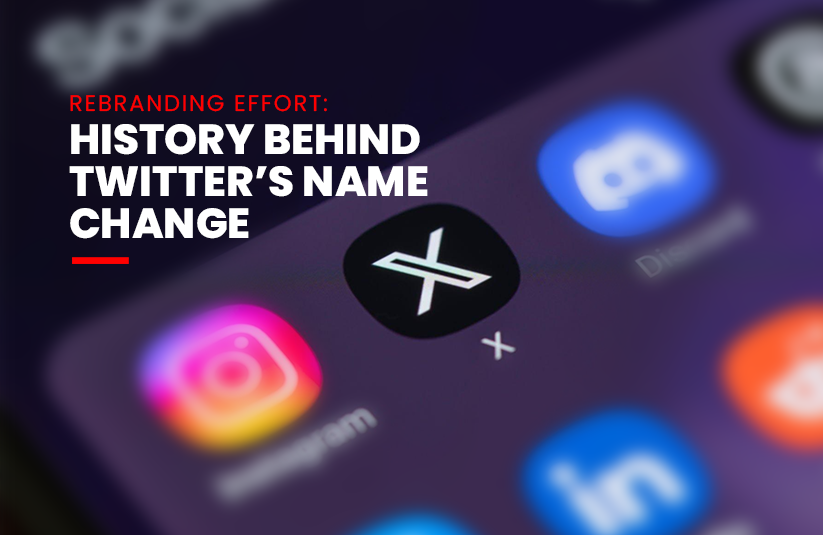
Everyone is aware of the Twitter name change to “X” and the accompanying logo re-design. Many experts and users have discussed the history and effects of the Twitter name change and its impact on users. When Twitter made its rebranding official, Elon Musk said this is all part of his larger mission to turn social media platform (Twitter) into the “Everything app” and indicated that the bird would no longer play a part in that mission. Afterwards, there were lots of tweets both for and against Musk’s opinion.
Changing the name from Twitter ultimately represents something bigger than just a change in design, it reflects a strategic move toward branding the site for the digital future. Musk’s vision is beyond social networking, with a view to collapsing messaging, content posting, financial services and other digital applications into one combined ecosystem.
The Effect of the Name Change on Twitter
Figures from app intelligence firm Sensor Tower showed that the Twitter name change led to a 4% drop in active users in the weeks following the rebrand. This marked an 8% and 22% drop for Android and iOS respectively. Importantly, usage of Twitter Lite soared after the alteration, indicating that some users may certainly prefer a lighter and less sophisticated product.
In spite of such a swing in users, the Twitter rebranding is still making headlines. The social media platform is now seeing increasing competition from new platforms such as Mastodon, Instagram Threads and Bluesky, as people seek out alternatives to the known interface. While some view the rebrand as a courageous move towards change, others are concerned with long-term commitment and the recognition of the brand.
Why “X”?
The letter X is a major connection to Musk’s personal and professional life:
- X.com, the first company Musk founded, an internet payment service was originally founded in 1999 and would later be folded into PayPal.
- SpaceX: Musk’s economy mission to explore space, the “X” meaning exploration, to signal renewal, looking forward and perhaps a new level of innovation.
These ventures influenced the Twitter name change to “X”. Musk’s intention is to create an “Everything app,” like WeChat in China, where people can chat, buy stuff, pay bills and access lots of different services all within one app. With the name “X,” Musk indicates a larger aspiration than microblogging, a shift of Twitter into a multi-use digital ecosystem.
Key Updates After the Twitter Name Change
Since the rebranding, the site has introduced a number of significant alterations:
- Authors are now able to publish a greater range of content, such as lengthy videos and varied media types.
- Musk has suggested that they open up into financial services, enabling users to make transactions through the site itself.
- Some users and executives have questioned it, wondering how they could possibly retire the Bluebird logo and how it might affect user loyalty.
The name alteration on Twitter is not surface level, it aims to reimagine and modify the site from a social network to a full digital service, indicative of a shift in the site.
Controversies and Public Reaction
Rebranding Twitter has generated controversy on social media and among technology enthusiasts:
- Some wonder why the firm would ditch a brand name that was well-known throughout the world and had decades of good will behind it.
- Fears of decreased activity and upsetting current campaigns have been expressed.
- Long-term users have navigated a learning process related to the implementation of new features and identity alterations.
It is interesting to note that later, in the months after the rebranding, Twitter’s “About Us” page still showed the old branding, showing that the transition was simultaneous. However, by 2025, the shift has been largely completed with most official pages and app interfaces now fully aligned with the X identity.
Trending Now: Why the Buzz Isn’t Fading
Even now, discussions about the Twitter name change dominate social media trends and user conversations:
- Social media observers are drawing a comparison in trends on Twitter/X and the new entrants such as Instagram Threads.
- Memes, trending threads and polls on “X vs Twitter” continue to fuel user discourse.
- Content creators and influencers are testing the waters using the new platform, engaging in the experiment of content strategies, monetization strategies and visibility strategies.
These continuing conversations show the Twitter name change is not simply a re-brand but rather it is a cultural moment which reflects changed user expectations in the social media context.
Lessons of the Twitter Name Change
Twitter’s rebranding offers important lessons for companies thinking about making similar steps:
Brand Legacy Matters: Even drastic changes need to honor the history and familiarity established over years.
Vision Drives Change: Clear strategic objectives, such as Musk’s for an “Everything app” provide justification for rebranding choices.
Communication Is Key: Effective messaging helps make certain people know why the brand is changing.
Expect Mixed Reactions: Criticism and doubt are inevitable when rebranding legendary platforms, yet they also create visibility.
FAQs
- Should You Rebrand Your Company’s Logo?
A rebranding effort can be a great way to revitalize not just your brand but the audience you are trying to engage with too. That said, you should have a well-developed plan to transition your brand safely and reassure your customer’s trust.
- How Will the Twitter Name Change Affect Brand Identity?
Rebranding on Twitter has led to confusion for some long-term users as they adjust to the new X identity and features. Some individuals still prefer the original platform and brand identity impact can differ, reflecting a mix of nostalgia and acceptance of the platform’s evolving vision.
- Is Rebranding Always Successful?
Rebranding can have positive effects for a company, but it can also bring less familiar users and customer resistance to the new identity or logo. Rebranding does not always succeed and is based on several factors and how well the rebranding is executed.
Conclusions
The Twitter transition to X has provided one of the most significant rebranding moments in social media’s history. Even though the shift to X has been controversial and fraught with uncertainty. It illustrates the platform’s ambitions of becoming an all-in-one digital ecosystem.
No matter if users fully adopt the new shift or continue to have a nostalgia for the old brand, it highlights how vision, strategy and innovation can merge together to evolve a global platform.
Also read our recent article “Renaming Your Business: How to Change Your Name Without Losing Customers”