
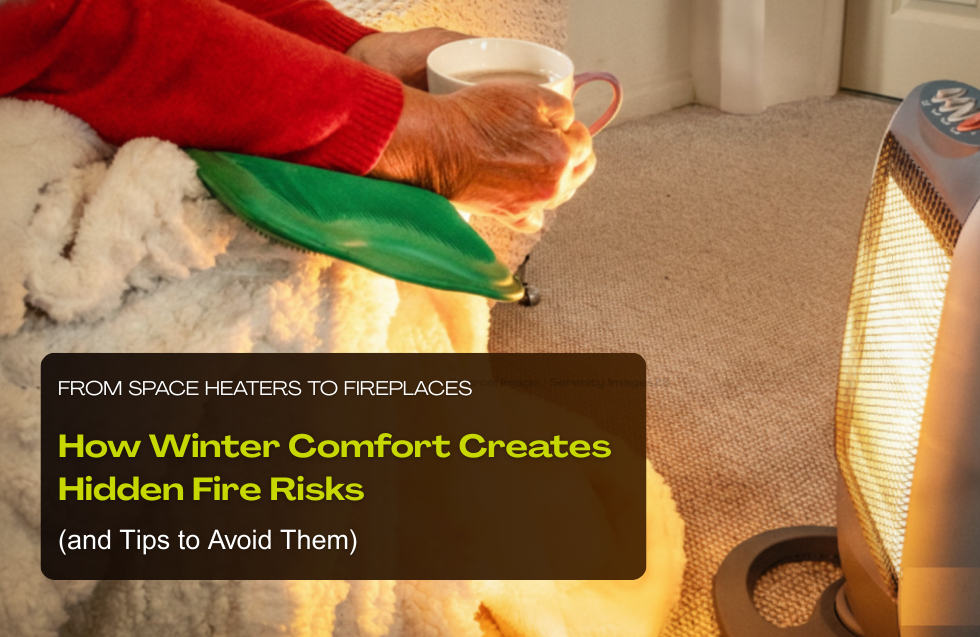
As the temperature drops and winter settles in, there’s nothing like entering your home, turning up the heat, and getting all toasty and cozy. Maybe you’ll ward off the chill by lighting the fireplace or cranking up space heaters. And when winter storms knock out the power, many homeowners depend on backup generators. While these tools provide essential comfort and warmth, they also introduce significant—and often overlooked—hazards to your home.
Home heating equipment is a major contributor to residential fires. According to the National Fire Protection Association (NFPA), from 2019 to 2023, U.S. fire departments responded to an average of 38,881 home heating equipment fires annually, resulting in 432 civilian deaths, 1,352 injuries, and $1.1 billion in property damage. These statistics underscore the significant risks associated with the improper use of home heating equipment and emphasize the importance of taking precautions to prevent heating-related fires.
If you haven’t already, now is an excellent time to review your home heating practices and ensure you’re safety-prepared for cold weather. It is also helpful to consider your home insurance options, including finding quality yet cheap homeowners insurance, in the event of the unexpected.
Hidden Winter Fire Risks
Winter presents a unique set of fire hazards that differ from those of other seasons. During the warmer months, we typically worry about wildfires or grilling accidents. In winter, the danger moves indoors. Here are some common hidden fire risks that homeowners face:
Space Heaters: The Silent Hazard
Space heaters can be a wonderful way to warm up chilly rooms, but these convenient devices can turn into fire hazards. The primary danger is not necessarily the device itself, but how it is used. Placing a heater too close to upholstered furniture, bedding, curtains, or even a pile of laundry can be disastrous. And in the case of some older models, exposed heating coils can also cause serious burns on contact.
Statistics paint a clear picture of this risk. While central heating systems are involved in more fires overall, portable electric space heaters are far more deadly. Among all types of home heating equipment, space heaters and heating stoves lead to the greatest losses. They’re involved in almost half of heating-related fires (47%) and contribute to most of the resulting deaths (73%) and injuries (70%). The heating elements in these devices get incredibly hot, and without proper clearance, radiant heat can ignite nearby combustible materials in seconds.
Fireplaces and Chimneys
A crackling fire is the centerpiece of winter comfort, yet it requires rigorous maintenance. The hidden risk here is creosote—a dark, tar-like substance that builds up inside your chimney as wood burns. If not cleaned regularly, creosote can ignite, causing a chimney fire that can spread to the roof and the rest of the home.
A missing or damaged spark screen also poses a serious threat. Without a barrier, popping embers can shoot out of the hearth and land on carpets or rugs, smoldering unnoticed until they ignite a flame.
Candles During Power Outages
Winter can bring storms and wind, leading to power outages. When the lights go out, many households instinctively reach for candles. While these traditional go-tos provide immediate light, unattended candles are a major fire hazard. Candles cause an average of 20 home fires every single day. A candle knocked over by a pet or placed too close to holiday decorations can turn a temporary power outage into a permanent tragedy.
Improper Generator Use
Portable generators are lifesavers during blackouts, helping to keep the fridge running and the lights on. However, incorrect usage creates dual risks: fire and carbon monoxide (CO) poisoning.
A common mistake is attempting to run a generator inside a garage, basement, or enclosed porch to keep it out of the snow. The extreme heat of generators can ignite nearby fumes or materials. And if you’re refueling, a hot generator can cause spilled fuel to ignite instantly.
Overloaded Outlets and Wiring
Winter often means more demand on your home’s electrical system. Between running space heaters, plugging in electric blankets, and stringing lights, outlets can easily become overloaded. This is especially risky in older homes with outdated wiring.
Wet outdoor electrical connections also pose a threat. If extension cords running lights or equipment aren’t properly weatherproofed, melting snow or rain can cause shorts and sparks.
Tips to Reduce Fire Risks
Knowledge is power, but action is protection. By making small adjustments to your winter routine, you can drastically reduce the likelihood of a fire.
Create a “Circle of Safety” for Space Heaters
The most effective rule for space heaters is simple: maintain a three-foot clearance zone. Keep the heater at least three feet away from anything that can burn, including people and pets.
● Plug it right. Always plug space heaters directly into a wall outlet. Never use an extension cord or power strip, as they can overheat and melt.
● Upgrade your tech. Replace any old heaters that have exposed coils. Look for modern units with automatic shut-off features that cut the power if the unit tips over.
Maintain Your Fireplace
● Inspect annually. Have a certified chimney sweep inspect and clean your chimney once a year before the heating season begins.
● Screen it. Always use a metal mesh screen or glass doors to keep embers inside the firebox.
● Cool the ashes. Never dispose of fireplace ashes in a plastic bin or paper bag. Place them in a metal container and keep it outside, away from the house, for at least a few days until they are completely cold.
Rethink Lighting During Outages
● Go battery-powered. Stock up on LED flashlights and battery-operated lanterns. They are brighter, last longer, and pose zero fire risk.
● Use candles safely. If you must use candles, place them on sturdy, non-flammable surfaces away from drafts, clutter, and high-traffic areas where they could be knocked over.
Generator Safety Protocol
● Keep it outside. Operate generators outdoors only, positioned at least 20 feet away from windows, doors, and vents to prevent CO entry and fire spread.
● Cool before fueling. Turn the generator off and let it cool down for at least 15-20 minutes before refueling.
Proper Electrical Practices
● Inspect cords. Check cords for fraying or cracking before plugging in heaters, lights, or any other electrical appliance. Discard any damaged cords immediately.
● Weatherproof: Use covers for outdoor outlets and ensure all outdoor extension cords are rated for use in exterior environments.
5 Must-Do Indoor Fire Safety Steps: A Checklist
To summarize the above tips, follow this simple checklist for staying safe in winter.
● 1. Give Space Heaters 3 Feet of Clearance. Create a safety zone around your heater and always plug it directly into the wall outlet.
● 2. Clean Chimneys and Use Screens. Don’t light the first fire of the season until you know the chimney is clear of creosote and debris.
● 3. Use Generators Outdoors Only. Never compromise on this. Keep them dry and far away from the house.
● 4. Avoid Candles in Outages. Switch to flashlights or battery-powered lanterns to eliminate the risk of an open flame during an emergency.
● 5. Extinguish and Unplug. Never go to sleep or leave your home with a space heater running, a fireplace burning, or candles lit.
Stay Warm, but Play It Safe
Winter should be a season of comfort, family, and warmth, not worry. While heating equipment and power outages present real risks, they can be managed with good habits and awareness. Respect the power of your heating equipment and tools and remain vigilant about maintenance to help create a safe environment for everyone under your roof. Fire prevention is one of the most proactive ways to protect your property, but it also pays to have a safety net. Ensure your home is fully covered for whatever winter brings by reviewing your policy options. Consider looking for comprehensive house insurance coverage that keeps you protected year-round. Stay cozy, stay safe, and conquer the cold!