High performers often think effort is enough. It usually is. Until it isn’t.
When systems shift, leaders change, or standards tighten, many strong professionals keep doing what worked before. They work longer hours. They deliver more output. They wait for recognition. Then they get confused when results stall or feedback turns vague.
This is where careers quietly slip.
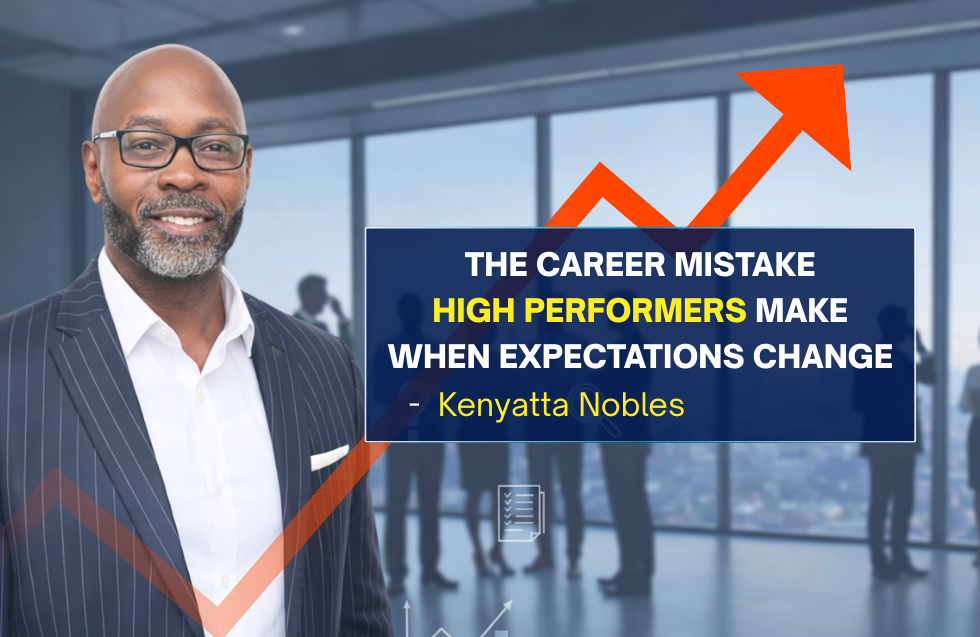
Kenyatta Nobles has spent more than 20 years leading human resources teams across healthcare, public service, and non-profit organisations. He has advised executives, presented to boards, and managed large workforces through periods of change. His work gives him a clear view of where capable people get stuck and why.
“I’ve seen top performers lose momentum not because they failed, but because the rules changed and no one told them,” he says. “They kept playing the old game.”
This article explains that mistake and how to avoid it.
The Mistake: Assuming Expectations Stay the Same
High performers rely on patterns. Deliver strong work. Get good feedback. Earn trust. Repeat.
The problem starts when the pattern breaks.
New leaders arrive. A new strategy rolls out. Metrics tighten. Reviews become more structured. The work looks similar, but the scoring system changes.
Many professionals miss this moment.
They assume silence means approval. They assume past success still counts. They assume effort will be noticed.
Data shows the risk. About 40% of employees say they do not clearly understand how their performance is measured. Nearly 50% say expectations changed in the past year without clear explanation. High performers often sit in that gap because no one checks on them.
“They’re trusted,” Nobles explains. “So leaders stop explaining. That’s when confusion grows.”
Why High Performers Miss the Shift
High performers are busy. They are reliable. They fix problems before they reach leadership. That becomes a trap.
They stop asking questions.
They stop testing assumptions.
They stop checking the scoreboard.
In one organisation, Nobles watched a senior manager deliver strong results while missing new leadership priorities. The manager focused on output volume. Leadership had shifted to risk control and consistency. Reviews reflected the new focus. The manager was shocked by the feedback.
“He said, ‘I did more than anyone,’” Nobles recalls. “Leadership said, ‘You did wrong more.’”
That gap hurts careers.
Systems Change Faster Than People Notice
Systems change quietly. A new review cycle. A new approval step. A new report format. Each seems small.
Together, they signal a new standard.
Across industries, organisations are increasing in structure. More formal reviews. More data tracking. More documented decisions. Over 60% of managers report higher accountability pressure than two years ago.
This affects individuals first.
If you do not adjust how you show value, someone else will define it for you.
“Clarity beats effort every time,” Nobles says. “Effort without alignment looks like noise.”
The Second Mistake: Waiting for Clear Direction
Many professionals wait for clear instructions before changing course. That used to work. It works less now.
Leaders assume adults will adapt. They expect questions. Silence is read as understanding.
Waiting becomes a signal.
It suggests comfort with ambiguity or lack of awareness. Neither helps.
In organisations with shrinking margins or higher scrutiny, leaders reward those who reduce uncertainty.
That means asking early and often.
What High Performers Should Do Instead
Reset Your Understanding of the Scoreboard
Every role has a scoreboard. It may not be written down. It still exists.
Ask three direct questions:
- What does strong performance look like this year?
- What risks matter most now?
- What outcomes matter more than effort?
Write the answers down. Compare them to last year.
If they differ, adjust fast.
Track Impact, Not Activity
Busy work feels productive. Impact gets rewarded.
High performers often describe effort instead of results. That worked when trust was high and systems were loose. It fails when standards tighten.
About 55% of managers say they rely more on measurable outcomes than narrative feedback today.
Translate work into results:
- Time saved
- Errors reduced
- Risk avoided
- Decisions enabled
That language travels upward.
Make Assumptions Visible
Unspoken assumptions create misalignment.
Say them out loud.
“I’m prioritising speed over detail here. Is that still right?”
“I’m focusing on volume. Has accuracy become more important?”
These questions feel small. They prevent big mistakes.
“People think asking shows weakness,” Nobles says. “I see it as professional maturity.”
Adjust How You Communicate
When systems change, communication style must change too.
Short updates beat long explanations. Clear status beats passion. Evidence beats intention.
Leaders under pressure want fewer surprises.
That means:
- Clear timelines
- Early warnings
- Simple summaries
High performers often over-explain. Under pressure, leaders skim.
Rebuild Trust Actively
Trust does not carry over automatically during change. It must be refreshed.
Do what you say. Say what you do. Close loops.
In one organisation, Nobles watched trust erode during a restructure. The strongest performers recovered fastest because they reconnected with new leaders early.
“They didn’t wait to be evaluated,” he says. “They made their value obvious.”
Common Red Flags to Watch For
- Feedback becomes vague or delayed
- Praise drops but criticism stays unclear
- Decisions move around you instead of through you
- New processes appear without explanation
These are signals. Not insults.
Ignore them and risk drifting.
The Payoff of Adapting Early
Professionals who adapt early gain leverage.
They become translators between old systems and new ones. They reduce friction. They earn renewed trust.
In uncertain environments, leaders rely on those who bring clarity.
That is how careers accelerate during change.
“Success isn’t staying the same,” Nobles says. “It’s staying relevant when the rules move.”
Final Thought
High performance is not fixed. It is contextual.
When expectations change, effort alone is not enough. Awareness matters more. Alignment matters most.
Check the scoreboard. Ask better questions. Show impact clearly.
Do it early.
The best careers are not built by those who work the hardest. They are built by those who adapt the fastest.