Introduction: A New Frontier for Brands
Picture your brand as a spaceship poised to launch. For a number of years, it has been in orbit around the same planet- familiar markets, loyal consumer bases, consistent routines. But there is a new world on the horizon. A world of new opportunity and new people, a sector full of potential yet to be discovered.
The answer is simple: remain in orbit where it is comfortable and stay, or launch yourself on a new brave trajectory. That’s what brand repositioning is all about. It’s not simply changing a logo or a tagline, it is writing your new story so the future consumer sees you as the brand they have been waiting for.
What Does It Mean to Reposition Your Brand?
Understanding Brand Repositioning
To reposition your brand means to change perception, redefine value and identify yourself with the consumer of tomorrow. It is about introducing a new and yet familiar perspective when extending to new markets.
Imagine your brand is a book: Repositioning is simply turning the page to a new chapter that resonates with the reader before continuing.
Positioning vs Repositioning:
Positioning: Placing your brand in the market it exists in now.
Repositioning: Modifying that positioning to win in an emerging economy and opportunity.
One defines the stage, the other rewrites the story.
Signs that suggest that it is time to reposition
- Rising competitors with advanced tech and fresh approaches.
- Customers are migrating toward new values like sustainability and inclusivity.
- Declining growth in traditional markets.
- Expansion into global or digital-first spaces.
- Preparing for a Future-Ready Brand Repositioning
- Harnessing Predictive Market Intelligence
Brands today employ AI-fueled predictive analytics to predict consumer change, simulate scenarios and reveal opportunities before they are fully apparent.
Redefining Target Audiences for the Next Era
The buyers of the next era will be hybrid consumers, seamlessly moving between physical and digital spaces. Repositioning involves finding these next-gen personas influenced by climate consciousness, digital culture and age diversity.
Competitor Intelligence in Future Markets
Your future competitor may not yet even exist. They may be a Web3 or an AI-first disruptor. Repositioning involves looking to the future landscapes, not merely existing competitors.
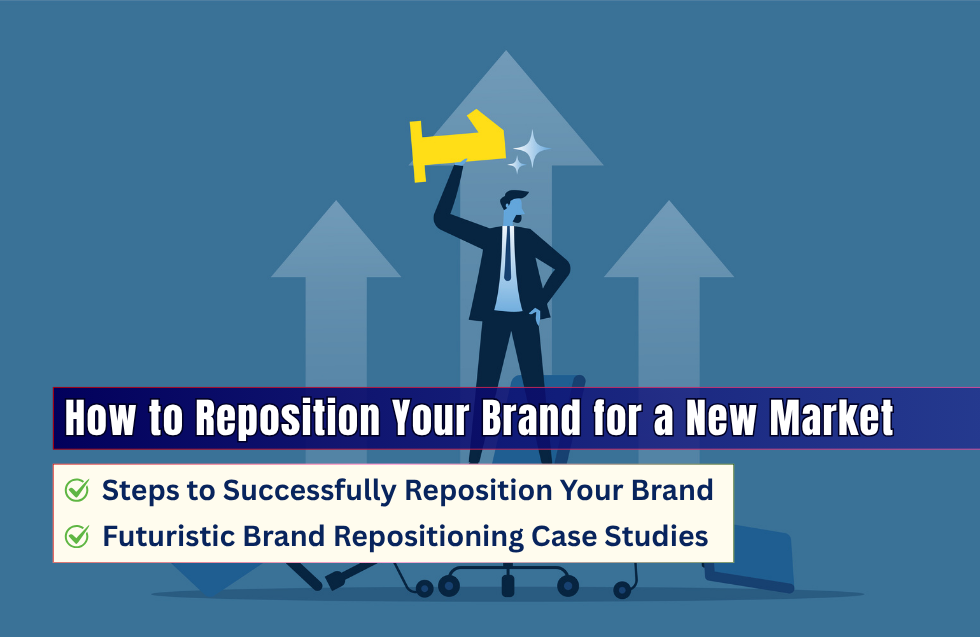
Steps to Successfully Reposition Your Brand
Create a Future Value Proposition
People will choose to align with brands that are more than price or convenience. The consumer will be looking for authentic brands, ethical artificial intelligence, sustainability and in the end, seamless personalization.
Change Your Communication into Immersive Storytelling
Campaigns are not passive but involved. Branded stories utilizing AR/VR, gamification and participatory narratives develop stronger emotional connections.
Reinvent Your Digital Identity
Your real identity is not a logo but the experience across smart devices, AI chatbots and immersive worlds. Repositioning requires digital-first brand imagery that performs everywhere.
Co-Create with Customers
Future brands succeed when customers are co-authors. With social listening, blockchain-enabled feedback and community-led campaigns, repositioning is a collective odyssey.
Align with Future Marketing Trends
- Personalization at scale through AI.
- Circular and sustainable business models.
- Immersive commerce through AR/VR.
- Decentralized Web3 communities.
Futuristic Brand Repositioning Case Studies
1. Tesla: Transition from Car Manufacturer to an Energy Ecosystem
Tesla has shifted its placement from just cars to a sustainable energy leader, to redefine how people think of mobility and energy.
2. Adidas: Guiding Through Sustainability
Adidas changed its persona by introducing environmentally friendly items and circular fashion, appealing to climate-conscious generations.
Challenges of Brand Repositioning for the Future
1. Balancing Tradition and Innovation
Brands endanger the loyal followers when making a shift. Success is achieved by respecting tradition and accepting innovation.
2. Resisting Identity Fragmentation
Going after every trend weakens identity. The most powerful repositioning develops without compromising the brand’s soul.
3. Nurturing Hyper-Skeptical Consumers
Consumers want proof. Brands need to support sustainability and AI assertions with open actions and trackable facts.
Measuring the Success of Future Repositioning
- Critical Evaluation Metrics
- AI-driven sentiment monitoring.
- Participation in immersive and digital-native media.
- Retention across generations.
- Increasing the sales attributed to hyper-personalized marketing strategies.
- Utilizing the AI to optimize
AI doesn’t just measure, it forecasts. Brands dynamically reposition, optimizing strategies from real-time information.
FAQs on Brand Repositioning
1: How do you reposition your brand going into 2026?
Keeping your foundation principles intact, but redirecting your marketing towards the impending trends such as AI, sustainability and immersive tech.
2: Explain the 3-3-3 marketing rule
Test three messages, three formats and three ecosystems (physical, digital and immersive) to find out what will “stick”.
3: List the 4 C’s of future branding position
- Clarity
- Consistency
- Cultural relevance
- Circularity(sustainability)
4: List the 3-7-27 rule of branding
- 3 interactions for recognition
- 7 for engagement
- 27 for enduring trust
5: How often should a brand reposition?
Every 2–3 years, or whenever cultural or technology changes require it.
6: What blunders must brands take care to avoid?
Overpromising trends, underperforming on values and shutting out consumers.
Conclusion: Writing the Next Chapter
Every brand has a narrative. Some narratives remain constant, secure and familiar. But those that shift the world are those that transform.
Think about Netflix, which took the concept of DVD rentals and made it a worldwide streaming phenomenon or Apple which took a computer company and turned it into a cultural lifestyle hallmark. Neither of these were done haphazardly, both were bold reimagining of the story that was recently going stale.
Now it’s your chance, the question isn’t:
- Will you reposition but how will you write the next chapter?
- Will your brand continue to be a participant from yesterday’s marketplace or will it become the hero in tomorrow’s story?
The pen is yours, start your brand’s next chapter today. Begin with a market audit, customer insight and a clear repositioning roadmap.
Also Read: Renaming Your Business: How to Change Your Name Without Losing Customers