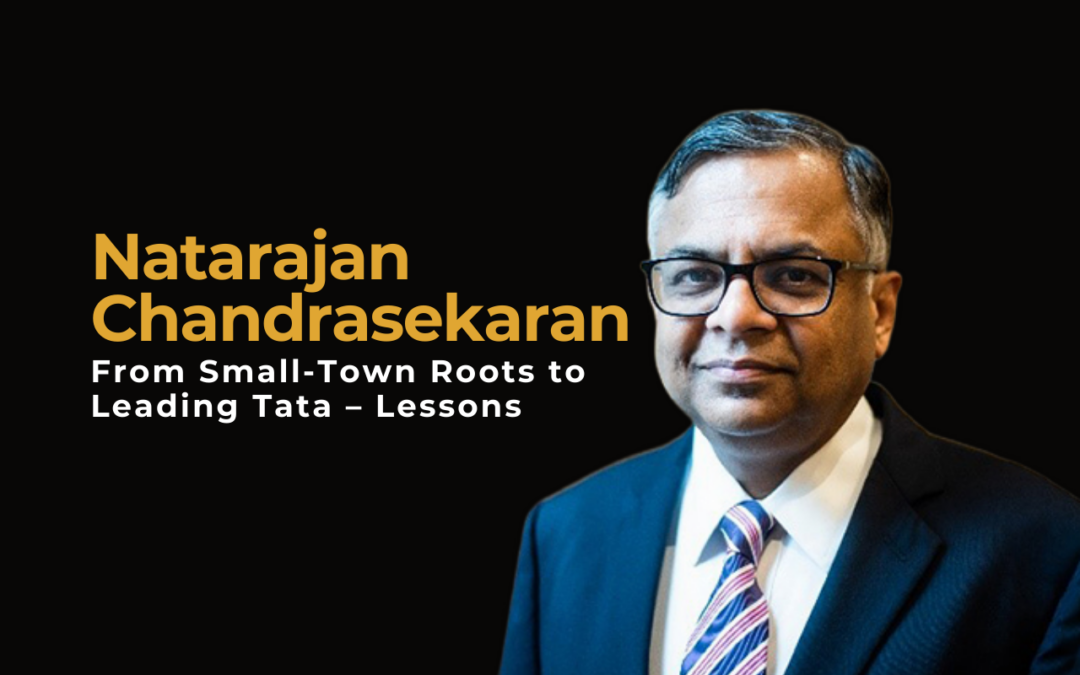
From a quiet village in Tamil Nadu to the helm of India’s largest conglomerate, Natarajan Chandrasekaran’s story inspires millions. Chandra runs Tata Sons and he uses his leadership to protect the 120 billion dollar Tata Group from technological changes while expanding the company into new markets. The combination of his determination, intelligence and his ability to lead without showing off creates a path for entrepreneurs to follow. The blueprint represents an ideal model which modern entrepreneurs need to use.
Who is Natarajan Chandrasekaran?
Natarajan Chandrasekaran has worked as Tata Group’s primary executive officer since February 2017 when he became Chairman of Tata Sons. His 62nd birthday celebration occurred last summer because he was born on June 2 1963 in Mohanur which is a small town located close to Tiruchirappalli in Tamil Nadu. The “Tata Motors owner” does not exist as a real identity because Tata Sons functions as the main parent company of the corporation. Chandra broke barriers as the first non-Parsi Tata chief, rising from humble TCS roots to steer giants like TCS, Tata Steel and Air India.
At age 62 he now manages three major projects which include turning around aviation companies, creating electric vehicles and developing artificial intelligence technology. His calm appearance actually conceals a strong leader who transforms emergency situations into successful results. The annual search volume for “who is Natarajan Chandrasekaran” shows a significant increase because people want to know about him. He leads Tata into a new era of powerful operations through his reliable leadership.
Natarajan Chandrasekaran Education and Qualifications
Natarajan Chandrasekaran education tells a classic underdog tale. He began his academic journey by earning a Bachelor’s degree in Applied Sciences from Coimbatore Institute of Technology which functioned as an important engineering college during the 1980s. He wanted to continue his studies, so he decided to enroll in the Master of Computer Applications program at NIT Tiruchirappalli which functioned under its original name of Regional Engineering College. He achieved success through his Tamil roots without needing any Ivy League education.
His education brought him to TCS in 1987 where he worked as a tape librarian who manually operated data reels. Chandra taught himself programming through self-study during nighttime hours which allowed him to rapidly advance his career. His technological expertise became extremely valuable when digital advancements occurred. Aspiring leaders demonstrate their superiority through their actual knowledge which surpasses the temporary appeal of prestigious degrees.
Natarajan Chandrasekaran Net Worth, Salary and Age
Natarajan Chandrasekaran net worth sits around Rs 1875 crore which he built through strategic investments in Tata companies and his extended tenure with the company. His salary for the fiscal year 2024 reached Rs 135 crore which represents a 20 percent increase that places him among the highest paid executives in India. At 62 age whispers retirement but Chandra laughs it off. His recent term extension to 2032 proves value trumps calendars.
Chandra’s current payday stands in direct opposition to his upbringing which began when his father worked as a farmer in their village. Chandra’s wealth demonstrates his ability to create lasting value which he developed over three decades instead of pursuing quick profits. He uses the funds to support his marathon running and his charitable activities which help him maintain a sense of stability.
Natarajan Chandrasekaran Family and Roots
Lalitha Chandrasekaran remains out of public attention while supporting her husband. The couple has one son, Pranav, who keeps a low profile amid Tata’s glare. Chandra credits his parents, farmer Srinivasan and homemaker Meenakshi, for teaching him fundamental values of hard work, honesty and integrity without shortcuts.
Fitness enthusiast Natarajan Chandrasekaran runs marathons worldwide, including Mumbai and New York. That discipline shapes his strategic boardroom decisions. Family anecdotes remain rare, but his village roots in Mohanur, Tamil Nadu run deep.
Chandra’s TCS Rise to Tata Powerhouse
Chandra’s TCS saga spans 30 years. Joined 1987, became Chief Operating Officer by 2008, then CEO/MD from 2009 to 2017. He transformed TCS from a services player to digital beast, hitting a $100 billion-plus market cap. Bets on cloud, analytics and cybersecurity paid massive dividends.
Tata Sons called in 2017 amid Cyrus Mistry ouster chaos. Chandra stabilized, then surged:
- Acquired Air India for Rs 18,000 crore in 2022, turning red ink to black.
- Pushed Tata Motors to India’s EV king with Nexon.ev sales booming.
- Launched Tata Neu super app, chasing Amazon.
Revenue doubled to Rs 11 lakh crore; profits tripled. “One Tata” glued silos into synergy.
Recent Updates on Natarajan Chandrasekaran (2026)
2026 kicked off with fireworks. On February 24, Tata Sons board at Bombay House locked in Chandra’s third five-year term, stretching to February 2032. He will lead at 70, a historic nod past retirement norms. Tata Trusts greenlit it in October 2025 for continuity amid storms.
Why now? Tata plans to spend Rs 60,000 crore on capital expenditures. The company invests Rs 30,000 crore in renewable energy projects through its green hydrogen plants in Maharashtra and its large data centers and AI facilities. The remaining funding supports Tata Digital expansion and Air India fleet growth through its 500-plane order and the company’s defense projects which include fighter jets.
On february 18, 2026 at India AI Impact Summit, Chandra dubbed AI “foundational like electricity or internet.” Tata inked OpenAI data center pact; Google scouts $15 billion India hub. TCS board preps AI strategy next week after market cap slipped to Rs 9.6 trillion low. Chandra’s New Year 2026 letter vows new ventures in top-5 revenue by FY27. The group plowed Rs 5.5 lakh crore into future-proofing. Tata Capital listed fresh too.
Challenges loom: Aviation losses, steel slumps, but Chandra’s batting average shines.
Lessons from Chandra’s Journey
1. Start Small, Dream Big
From Mohanur fields to Tata helm, Chandra proves humble starts fuel giant leaps. Wannapreneurs take note: Resources matter less than grit.
2. Lifelong Learning is Key
NIT grads don’t stop. Chandra dives into AI and sustainability. Constant upskill beats complacency.
3. Lead with Empathy
TCS policies boosted employee welfare. Chandra builds trust, key for loyal teams.
4. Innovate Relentlessly
TCS digital push set benchmarks. Today, EVs and AI show foresight wins.
Balancing Tradition and Modernity
Chandra walks a tightrope masterfully. Tata’s 150-year trust legacy meets semis fabs, battery gigs and digital wallets. Air India aims for a Star Alliance premium by 2027. His mantra is to solve complex puzzles step-by-step, no ego. Padma Bhushan 2022 and France’s Legion d’Honneur nod global respect.
Key Takeaways for Wannapreneurs
Be Prepared for the Long Haul
Decades at TCS honed Chandra. Success demands patience.
Build a Strong Foundation
Solid education and skills pave the way, just like his NIT path.
Stay Grounded
Fame has not changed him. Humility forges bonds.
Think Beyond Profits
Tata impacts society. Purpose sustains empires.
FAQs
1. Who is Natarajan Chandrasekaran?
The Tata Sons chairman directs a 120 billion dollar business since he became TCS chief executive officer.
2. What is Natarajan Chandrasekaran’s qualification?
He holds a BE degree from Coimbatore Institute of Technology and an MCA degree from NIT Tiruchirappalli.
3. What is Natarajan Chandrasekaran net worth?
His net worth stands at Rs 1875 crore while his annual salary for FY24 amounts to Rs 135 crore.
4. Who is the owner of Tata Group?
The Tata Group operates through Tata Sons which Tata Trusts control while Chandra serves as Tata Sons chairman.
5. What is Tata Sons chairman’s recent term update?
The board granted his third five-year extension which will last until 2032 on February 24 2026 to support artificial intelligence and environmental initiatives.
Chandra’s rise proves dreams are stronger than family background. As Tata charges into 2030 with AI firepower and green muscle, his playbook endures. Entrepreneurs, grab it. What lesson hits home hardest? Share below.
Also Read: Ratan Tata – Entrepreneurial Journey