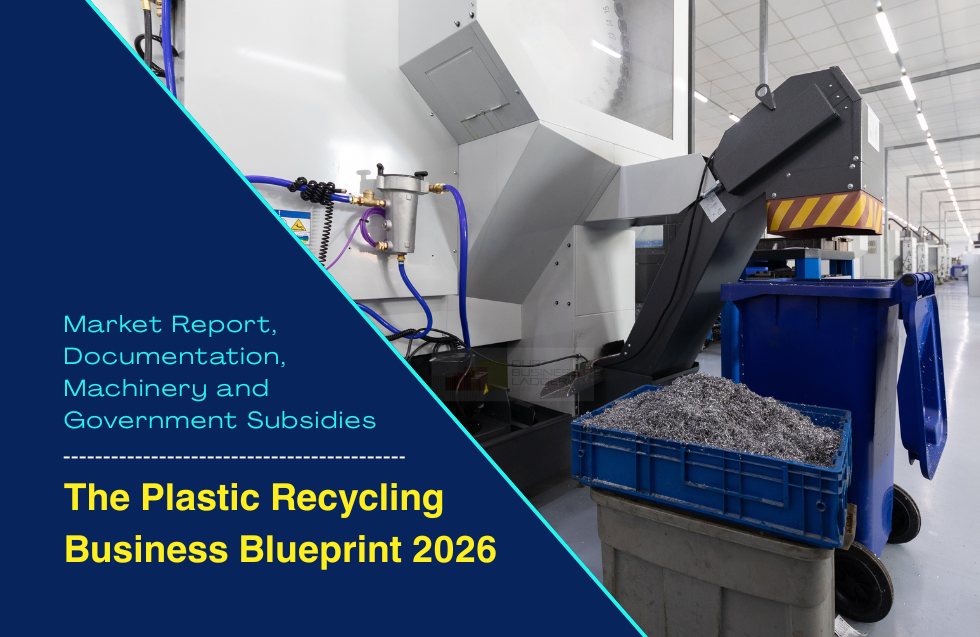
People now envision a successful enterprise which transforms multiple plastic waste heaps into valuable merchandise. The upcoming plastic recycling business which will open its doors in 2026 will operate during a period when sustainability regulations and environmentally friendly products reach their peak demand.
Extended Producer Responsibility (EPR) regulations combined with circular economy initiatives will drive the Indian waste plastic recycling market to reach 25.88 million tons by 2034 which will grow at an annual rate of 9 percent.
The complete process of establishing a plastic recycling business becomes simpler through this guide which provides information about what the business requires, the most suitable materials, the obstacles which businesses face, equipment expenses, current industry developments, revenue potential, required documents, available financial assistance and the simple procedures for starting operations.
What Does a Plastic Recycling Business Look Like?
A plastic recycling business operates as a factory which provides second chances to plastic materials. You gather used plastic, sort it out, shred and clean it, then melt it down into fresh granules, pellets, flakes, or even ready-to-use items like bottles, pipes, or cloth fibers. The circular economy principle shows how one location’s waste material becomes inexpensive raw material which companies use to create packaging products, automotive parts, construction materials and textile items that cost less than newly produced plastic. In India, you can start small by collecting PET bottles or go big with plants that use pyrolysis to turn messy mixed waste into fuel oil.
The beauty? Feedstock is cheap or free from cities, towns and waste pickers, perfect for small businesses. Your output can match world-class quality, letting you sell to buyers who need recycled stuff to meet green rules.
Which Plastics Are Easiest to Recycle for Profit?
Not every plastic is worth your time. Stick to the high-value ones marked with numbers 1 through 7 on the bottom, so your plastic recycling business runs smooth and pays off fast.
PET (#1): Think of water bottles and jars. Super easy to recycle, over 90% works great, turning back into bottles, clothes fiber, or straps.
HDPE (#2): Milk jugs and cleaner bottles. Tough and safe for food after recycling, perfect for new crates, pipes, or bins.
LDPE (#4): Grocery bags and wraps. Comes out flexible for more bags or films.
PP (#5): Yogurt tubs and lids. Strong enough for car parts or chairs.
Steer clear of PVC (#3) because of nasty chemicals, PS (#6) since it’s low-value fluff, or mixed #7 stuff. For the tricky bits, pyrolysis pulls out oil. PET and HDPE make up about 70% of what really pays in India.
Real Challenges in Plastic Recycling (And Smart Fixes)
People find it hard to recycle plastic because they think the process needs only two steps. The plastic recycling industry presents two major obstacles which exist because of contaminated waste materials and because customers have specific requirements for their products.
Big issues include:
Contamination: Leftover food and stickers mean heavy washing that eats 20-30% of your power bill.
Sorting headaches: Mixed junk ruins quality and India only recycles 10-15% of plastic the formal way.
Downcycling: Stuff weakens after a few goes.
Price swings: New plastic gets cheap sometimes and old bans like China’s flooded the world with scrap.
Rules overload: Tracking EPR and pollution stuff takes time.
Beat them with smart tools like AI sorters, teaming up with local pickers for cleaner supply, chemical tricks for hard plastics and EPR points to keep cash steady. Begin with basic mechanical methods for quick wins.
Machines You Need and What They Cost in 2026
Your machines are the engine of any plastic recycling business. Pick ones that match your size, from tiny setups at ₹20-50 lakh to full 1-ton-per-day lines at ₹1-3 crore.
Common Types of Plastic Recycling Machines:
| Machine Type | What It Does | Sample Capacity | 2026 Cost (₹ Lakh, India) | Great For |
| Shredder / Granulator | Chops plastic into small flakes | 500 kg – 2 tons / hr | 10-50 | Any plastic |
| Washing / Dryer Line | Scrubs off dirt and contaminants | 1 ton/day | 20-80 | PET/HDPE |
| Extruder / Pelletizer | Melts flakes into pellets | 200 – 500 kg / hr | 30-100 | Selling granules |
| Agglomerator | Prepares plastic films for melting | 300 kg / hr | 15 – 40 | LDPE bags |
| Pyrolysis Unit | Converts plastic waste into oil/fuel | 5 – 10 tons / day | 1 – 5 Cr | Mixed plastic waste |
| Baler / Compactor | Compresses plastic for transport | N/A | 5 – 15 | Collection & logistics |
A complete 1-ton line runs ₹1.5-2.5 crore for regular stuff, or ₹3-7 crore for pyrolysis. Buy local, import if needed and use subsidies to cover 70-80%. Turn 300 tons a year into ₹40-80/kg sales.
The 2026 Plastic Recycling Market at a Glance
Worldwide, recycled plastics are worth $85.9 billion this year (2025), heading to $149 billion by 2032 at 8.2% growth, with packaging taking 42%. India jumps from 11.92 million tons now to 25.88 million by 2034 (9% yearly) and pyrolysis grabs 26%.
Quick 2026 Market View:
| Area | Size in 2026 | Growth to 2030 | What’s Driving It |
| Worldwide | About $95 billion | 8.2% | EPR rules, green targets |
| India | 13-15M tons | 9% | Bans, must-use recycled |
| Asia-Pacific | Leading the pack | 9-10% | Building and fabrics |
Plenty of waste around, huge need in cars and boxes. EPR makes sure buyers have to use 30% recycled.
Fresh Recycling Business Ideas for 2026
Make your plastic recycling business stand out:
- Digital Collection Platform: An app linking waste makers to your plant, low startup cash.
- Specialized rPET Plant: Turn flakes into cloth fibers (₹2 crore, 40% profits).
- Pyrolysis Fuel Production: Junk to diesel where land is cheap.
- EPR Service Provider: Help brands collect their recycle points.
- Upcycled Goods: Make tables or tiles from flakes.
- Mix them for 25-50% better margins.
Does a Plastic Recycling Business Actually Make Money?
The business generates regular returns of 20 to 40 percent after reaching its initial profit threshold which takes 6 to 12 months. A ₹2 crore 1-ton plant requires waste purchases at prices between ₹8 and ₹12 per kilogram and customers can buy pellets at prices ranging from ₹50 to ₹80 per kilogram. The company achieves annual revenue between ₹1.5 crore and ₹2.4 crore while its expenses total approximately ₹80 lakh which results in profits between ₹70 lakh and ₹1.4 crore. The company achieves 30 to 40 percent profit growth through its combination of subsidies and returns. EPR keeps buyers coming even if new plastic dips.
How Profits Add Up (1 Ton/Day Plant)
| Part | Yearly Amount (₹ Lakh) |
| Sales (300 tons) | 150-240 |
| Buy Waste | 30-40 |
| Running/Power/Help | 50 |
| Profit Left | 70-150 |
| Return / Subsidy | 30-40% |
Paperwork to Get Legal and Running
Getting official takes 3-6 months; grab a consultant for ₹2-5 lakh to speed it up.
Must-Have Documents:
- Udyam/MSME sign-up (free, unlocks subsidies).
- GST, PAN, bank setup.
- CPCB/SPCB okay to start/run (₹1-5 lakh).
- EPR sign-up on the government site.
- Factory permit, fire/boiler safety.
- Land nod for industry (1-2 acres).
- Experts make it painless.
Government Help and Subsidies for 2026
Subsidies knock 25-50% off your start costs, easy entry for plastic recycling business.
- MSME Plans: 25-35% off machines (up to ₹1 crore).
- Circular Boosts: 10-20% build help, job bonuses.
- PLI for Plastics: ₹2,000 crore tech cash.
- SIDBI Green Money: Loans at 7-9%.
- EPR Goodies: Points for proven recycling.
Hit up MSME sites online; snag up to 70% funding.
Your Step-by-Step Start Plan
- Waste Audit: Check what’s around locally.
- Feasibility Plan: Spend ₹50,000 on a check.
- Sign Up & Money: Lock subsidies and loans.
- Get Gear: From trusted sellers.
- Hire & Train: 15-30 people.
- Run It: Land deals with buyers.
- Grow: Tack on fancy lines.
Safe bet, grows easy.
Why Jump In Now?
India wants 50% recycling by 2030 with bans and zero-waste goals lining up perfectly for solid and green profits. Get your stuff certified, connect with groups and build that plastic recycling business strong.