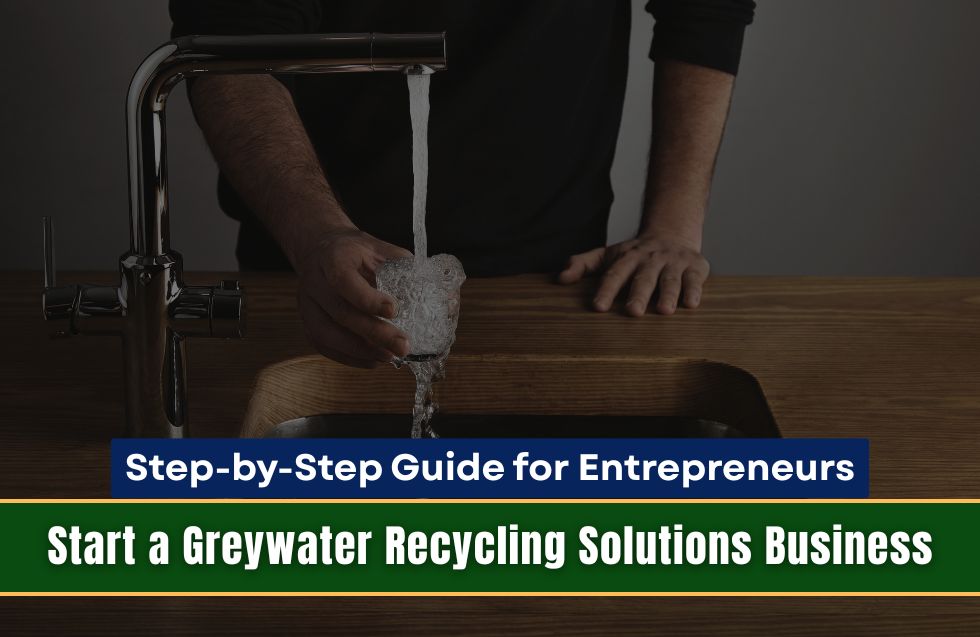
Scarcity of water has increased as one of the biggest issues confronting our world today. While cities develop and populations increase, demand for fresh water also increases. As a result, traditional sources of fresh water are declining and most of the population is asking for alternative methods of replenishment which can be relied upon.
This is the main purpose of greywater recycling. Both business establishments and residential homes can reclaim and recycle their water that originates from their washing machine, shower or sink. Consumers can save on their water bill and maintain an available reserve of fresh water. This opens a new door for the water-minded entrepreneur: The Greywater Recycling Solutions Business.
Introducing a greywater recycling business contributes a service that will save water, will comply with new legislation, will foster environmentally sustainable business practices and will support an overall system with long-term return on investment. Let’s go through the steps and what you need to know to create this vision reality.
Step 1. Know What Greywater Recycling Is
Greywater is defined as wastewater generated from sources excluding sewage. This includes water used in sinks, showers, dishwashers and washing machines. To begin an effective greywater recycling solutions business, the initial step is to first learn about greywater recycling.
Recycled Greywater Applications:
- Irrigating lawns and garden areas
- Flushing the toilets
- Supplying cooling systems
- Washing vehicles
- Supporting construction activities
By demonstrating these applications, you will clearly outline to customers how your solutions can reduce water waste and save them money.
Step 2: Market Research
Market research is essential when you begin a greywater recycling solutions business. You want to know your customers and what they require.
Potential Client Segments
- Homeowners – Families who want to reduce water bills
- Businesses – Hotels, restaurants and offices that consume a lot of water
- Industries – Factories and warehouses where water is utilized as part of the business
- Municipalities – Cities and towns that invest in sustainability initiatives
Trends That Drive Growth
- Government incentives for water reuse
- Increasing water prices in cities
- Growing concern regarding climate change
- Corporate pledges to sustainability
By aligning your services with the above drivers of popularity, your service may have a higher chance of success.
Step 3: Learn Greywater Recycling Techniques
Varying customers need different recycling systems. Providing multiple options will attract more customers to your business.
Types of Greywater Systems
- Direct Diversion Systems – Low-cost and straightforward, these systems divert untreated greywater for irrigation.
- Mechanical Filtration Systems – Filters out dirt, lint and soap for safe reuse in toilet or landscaping.
- Biological Treatment Systems – Employ plants and micro organisms to biologically cleanse greywater. Environment friendly and inexpensive.
- Advanced Treatment Systems such as UV, Membranes and Ozone – Sophisticated systems that treat water to nearby potable standards, ideal for industries and hotels.
Each system has varying installation cost, maintenance and target market.
Step 4: Build Technical Knowledge
When customers invest in water systems, they want expertise. To become a trusted expert:
- Team with environmental engineers
- Get certified in water treatment and sustainability
- Attend trade shows and green business seminars
- Get hands-on installation and maintenance training
- Technical expertise is the foundation of trust in this market
Step 5: Select a Business Model
There are many ways to generate revenue when you initiate a greywater recycling solutions business. It does make sense to re-evaluate and revise your idea to include:
- System Installations – Your primary income source.
- Maintenance Contracts – Regular revenue that guarantees long-term client relationships.
- Product Sales – Selling replacement filters, pumps and tanks.
- Consulting Services – Advising companies and municipalities on system design.
The interaction between these revenue sources provides a robust business framework.
Step 6: Think About Everything Legal and Regulatory
Because recycled water has aspects of public health and environmental issues, you will consider your local regulators well in this step.
Examples of Common Requirements:
- Water reuse permits from local authorities
- Plumbing and building code approvals
- Environmental safety certifications
- Regular inspection of the system
By adopting protocols, you will build customer trust and avoid some fines.
Step 7: Develop Initial Cost Estimates and Funding Resources
The cost to develop a greywater recycling solutions business is influenced by the size/scale of your proposed operations.
Expense Estimated Cost Range
- Equipment & Tools $10,000 – $50,000
- Greywater Tanks & Filters $5,000 – $30,000
- Licenses & permit $1,000 – $5,000
- Staff Trainings $3,000 – $10,000
- Marketings & Branding $2,000 – $15,000
Funding Sources:
- Green business loans
- Government water conservation grants
- Private investors concerned with the environment
- Working with Non-Governmental Organizations (NGOs) that focus on the environment and social equity
Step 8: Market Your Greywater Solutions Business
Good marketing secures your services for the right customer.
Effective Marketing Strategies are:
- Create a professional website featuring previous projects.
- Post success stories or reviews and water saving tips on social media.
- Combine with architects, builders and real estate developers.
- Provide workshops & webinars on the necessity of water conservation.
Place your brand both cost-efficient and environmentally friendly. Both appeal to companies, homes and governments.
Step 9: Conquer Common Issues
As with any new business, opening this one has its challenges.
- High Upfront Expenses: Provide financing to make the installations within reach.
- Customer Acquaintance: Utilize education-marketing to describe advantages.
- Regulatory Quagmires: Be in close communication with local governments and industry professionals.
Addressing these issues early cultivates credibility and trust with customers.
Step 10: Gradually Grow Your Business
After building your foundation, seek methods to expand:
- Expand into new regions, especially water-stressed cities.
- Introduce smart monitoring technologies with IoT Partner and governments for large-scale water reuse projects.
- Provide training sessions for professional installer and technician certifications.
This scale is necessary for you to receive increased revenue and ongoing growth for your business or organization.
The Future of Greywater Recycling
As water shortages continue to worsen, the recycling of greywater will change from optional to must. Governments are beginning to increase regulation for water reuse in new buildings. Those businesses and families that thought greywater systems were a luxury, are starting to view them as a necessity. Entrepreneurs who establish a greywater recycling solutions business today will be pioneers in an exploding industry.
FAQs
Q1. What is required to begin a greywater recycling solutions business?
You will require an understanding of greywater systems, legal authorization, capital for startup and good marketing strategies.
Q2. How expensive is starting this business?
For startups, price may vary from $ 20,000 for small projects and over $ 200,000 for industrial.
Q3. What is a good greywater recycling system?
Small families prefer direct filtration and diversion systems while industries require more complex systems utilizing UV or membrane systems.
Q4. Is greywater suitable for agriculture?
Yes, but treated greywater alone is appropriate for irrigation of edible crops. Untreated greywater must never be applied to edible crops.
Q5. Who could be customers for this business?
Households, schools, hotels, factories and city projects are prime customers.
Conclusion
If you’ve been looking for a business that combines profit with purpose, this is it. Now is the time to start a greywater recycling solutions business. As global awareness of water shortages continues to increase, social demand for water recycling systems will increase as renewable energy does.
By understanding the concept of recycling, growing a larger body of knowledge and understanding regulations, while you develop a sound business model, either you or your organization could save people money, help the environment or provide a sustainable future resource.
Also read: What Is Greywater Recycling and Why It’s a Game-Changer for Sustainable Living